
JOHNS HOPKINS OUTPATIENT AT JHOC
Accepts Medicare AssignmentAccepts AssignmentOn covered items you generally pay the Part B deductible plus 20% of the Medicare-approved amount.
Opening hoursShow opening hours
About JOHNS HOPKINS OUTPATIENT AT JHOC
Three decades on Medicare's rolls give Johns Hopkins Outpatient at Jhoc in Baltimore, Maryland a long memory. Medicare billing here spans Part B prescription drugs, diabetes testing supplies. Johns Hopkins Outpatient at Jhoc joined Medicare's supplier rolls in 1994; it accepts Medicare assignment. Its Google profile carries a 2.5-star rating across 62 reviews. Federal records list its authorized official as Daniel Smith, VP Finance/cfo.
Location
Open in Google Maps ↗Supplies & Services 7
MEDICARE COVERAGE & PATIENT GUIDE
Medicare Guide for BALTIMORE Patients
-
Medicare Part B Drugs:
Only a limited set of prescription drugs is covered under Part B instead of Part D for patients in BALTIMORE — mainly drugs given through medical equipment, plus a few categories named in the law. Each drug has its own strict conditions.
What Medicare typically looks for:
- Inhalation (nebulizer) drugs are covered only when administered at home through a Medicare-covered nebulizer.
- Immunosuppressive drugs are covered after an organ transplant that Medicare helped pay for, for as long as you need them to prevent rejection.
- Oral anticancer drugs are covered when the same active ingredient is also available in an injectable form; oral anti-nausea drugs are covered only as a full replacement for IV drugs given within 48 hours of chemotherapy.
- Drugs delivered through a home infusion pump are covered only when both the pump and the drug are medically necessary for your condition. Epoetin is covered for anemia tied to kidney disease or certain cancer treatments, under its own criteria.
-
Diabetic Care & Supplies:
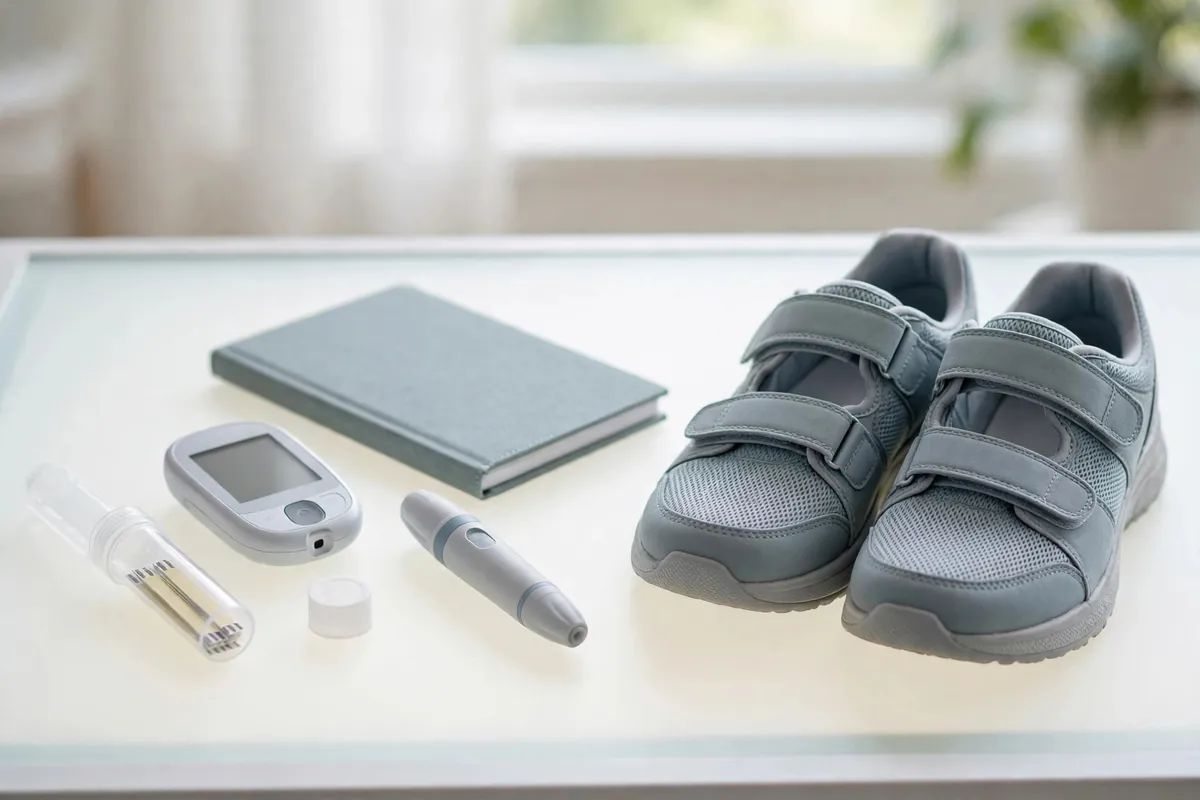
Medicare Part B covers blood glucose testing supplies, insulin pumps and therapeutic shoes for patients in BALTIMORE who have diabetes. Quantity limits apply, and your doctor can order more only by documenting the extra medical need.
What Medicare typically looks for:
- Test strips and lancets: the standard allowance is up to 300 of each every 3 months if you use insulin, or up to 100 of each every 3 months if you do not. Higher amounts require extra documentation and a recent visit with your treating doctor.
- Continuous glucose monitors (CGMs) are covered if you have diabetes and use insulin, or have a documented history of problematic low blood sugar (hypoglycemia).
- Insulin pumps are covered as durable medical equipment when you meet Medicare's pump criteria; the insulin used in a covered pump is covered under Part B, while insulin injected with a syringe or pen usually falls under Part D.
- Therapeutic shoes: one pair of depth-inlay shoes with 3 pairs of inserts, or one pair of custom-molded shoes with 2 pairs of inserts, per calendar year — if you have diabetes and a foot problem Medicare lists, such as a previous foot ulcer, amputation, foot deformity, or poor circulation, certified by the doctor treating your diabetes.
JOHNS HOPKINS OUTPATIENT AT JHOC accepts Medicare assignment, so for covered items you pay only the Part B deductible and 20% coinsurance of the Medicare-approved amount.
Before your doctor visit
Most Medicare equipment delays are paperwork delays, not medical ones. The appointment where your doctor orders your equipment goes much further when you prepare for it — here is how.
Bring to every appointment
- Your Medicare card and a photo ID. The supplier copies your Medicare Beneficiary Identifier (MBI) exactly as printed, so bring the red, white and blue card itself — not just the number from memory.
- A list of your current medicines, and of any treatments or simpler equipment you have already tried for this problem. Your doctor's notes should show why those options are not enough.
- Recent test results and records connected with the equipment — lab work, sleep studies, therapy or hospital notes. Bring copies if you have them; records from another doctor's office often take days to transfer.
- The name of the supplier you plan to use — JOHNS HOPKINS OUTPATIENT AT JHOC in BALTIMORE — and ask the office to send the order and the visit notes directly to the supplier. Paperwork that sits in a chart is the most common cause of delays.
- Before you leave, ask whether the written order is complete. Medicare requires every equipment order to show your name or MBI, the order date, a description of the item, the quantity if there is one, and your practitioner's name and real signature — an order missing any of these gets sent back.
- For many higher-cost items — power wheelchairs and some hospital beds, for example — Medicare also requires an in-person visit with your treating practitioner within the 6 months before the order. If your last visit was by phone, or longer ago than that, tell the office when you book.
Getting ready: Medicare Part B Drugs
- Bring a complete list of your medicines with doses. For Part B drugs, both the drug itself and how it is given — through a nebulizer, an infusion pump, or another covered method — affect coverage.
- If the drug follows a Medicare-covered transplant or cancer treatment, bring those dates and records. Some Part B drugs are covered only in those situations.
- Ask your doctor to note why the drug must be given this way instead of as a pill — for several Part B drug categories, that explanation is exactly what Medicare reviews.
Getting ready: Diabetic Care & Supplies
- Bring your medication list, making clear which diabetes medicines you take and whether you use insulin — how much testing-supply coverage you get depends heavily on whether you are insulin-treated.
- Bring recent blood sugar readings or A1C results if you have them, and tell your doctor how often you actually test each day, so the quantities on the order match your real use.
- If you are hoping for a continuous glucose monitor (CGM), describe any dangerously low blood sugar episodes you have had, and when — that history is part of what Medicare looks for.
Before you call JOHNS HOPKINS OUTPATIENT AT JHOC
Five minutes of preparation makes this call go further — the supplier can check your eligibility, confirm your likely costs and start the paperwork on the first try.
Have these ready
- Your Medicare card. The supplier will ask for your Medicare Beneficiary Identifier (MBI), exactly as printed on the card, to check that you are eligible.
- Your doctor's name, and the date of the visit where the equipment was discussed or ordered. The supplier will request the order and visit notes from that office — usually they handle the chasing for you.
- Your Medicare Advantage or other insurance card, if you have one. Plans other than Original Medicare can have different rules, networks and costs.
Ask on the call
- Do you accept Medicare assignment for this item? If the supplier accepts assignment, your share is limited to the Part B deductible plus 20% of the Medicare-approved amount.
- Will Medicare rent this item or buy it — and if it is rented, for how many months? Who do I call for servicing while it is rented?
- What is my likely share of the cost? Ask whether you have met your Part B deductible for the year, and for expensive items ask for the estimate in writing.
- What paperwork do you still need from my doctor — and once you have it, how long until the equipment is delivered?
- Do you deliver and set up the equipment, and show me how to use it? Is there any charge for delivery or setup?
- If you are in a Medicare Advantage plan: are you in my plan's network, and does my plan need to approve the order first (prior authorization)? An out-of-network supplier can cost you much more.
After your equipment arrives
Delivery day is not the end of the process. A few checks when the equipment arrives — and knowing who is responsible for what afterwards — can save you money and frustration.
On delivery day
- Check everything against the order before you sign: the right item, the right size, and every part and accessory on the list. You may refuse equipment that is wrong, damaged or incomplete.
- Sign only for what you actually received, and keep your copy of the delivery ticket. If you are asked to sign an Advance Beneficiary Notice (ABN), read it first — it means the supplier thinks Medicare might not pay, and signing can make you responsible for the full cost.
- Ask to be shown how to use, clean and store the equipment, and get the instructions in writing before the driver leaves.
- Keep JOHNS HOPKINS OUTPATIENT AT JHOC's service number with the equipment — (410) 955-3733 — and call them first if anything breaks or stops working.
Repairs, servicing and refills
- While Medicare is paying rent on equipment, the supplier owns it and is responsible for keeping it in working order — call them first for repairs or servicing during the rental period.
- When a capped-rental item becomes yours after the final rental month, Medicare can still help pay for medically necessary repairs. Keep your delivery paperwork so the supplier can verify the equipment.
- For oxygen, the supplier's duty lasts beyond the rent: after the 36-month rental ends, they must keep providing your oxygen and servicing the equipment for up to 5 years in total.
- Reorder supplies — masks, tubing, filters, dressings, test strips — before you run out. Suppliers usually need a few days, and Medicare pays only for quantities that match your documented need.
If a bill or a denial looks wrong
- Read your Medicare Summary Notice (MSN) and compare it with what you actually received. Wrong items, wrong quantities, and charges for things you never received do happen — call the supplier first to fix honest mistakes.
- Still not right? Call 1-800-MEDICARE (1-800-633-4227) and ask for an explanation of the claim.
- You have the right to appeal a decision you disagree with. The first step is called a redetermination, and you generally have 120 days from the date on the notice to request it — the notice itself explains how.
- You do not have to handle this alone: your SHIP program gives free help with bills and appeals. You will find their phone number in the free Medicare help section of this page.
- Protect your Medicare number. Never give it to someone who calls offering 'free' equipment you did not ask about — report suspicious calls to 1-800-MEDICARE.
Coverage and payment depend on medical necessity, eligibility, deductibles, supplier requirements, and applicable Medicare rules. Confirm benefits and any authorization requirements with Medicare or the provider.
FEDERAL REGISTRY & COMPLIANCE
CMS Federal Verification & Compliance Profile
Official federal enrollment, administrative identifiers, and executive registry.
National Provider ID (NPI)
Registered Specialties & Licenses
Pharmacy, Clinic Pharmacy
- Pharmacy, Community/Retail Pharmacy (License P01688 – MD)
Executive Leadership (E-E-A-T)
DANIEL B. SMITH — VP Finance/CFO
Also Registered As
JOHNS HOPKINS OUTPATIENT PHARMACY AT JHOC
CMS Provider ID (DMEPOS)
Medicare Enrollment & Status
Active Standing
Pricing & Bidding Compliance
NPI Registration
Registered since 2006
Federal Exclusion Check
Not excluded from federal programs
Registry details are displayed from the supplied provider data. Verify current enrollment and contract status with the relevant federal source before relying on them for billing or coverage decisions.
CMS MEDICARE CLAIMS DATA
Medicare Activity in 2024
Medicare’s own claims records show how much this supplier actually did for Medicare patients in 2024 — the most recent year CMS has published.
What they provided most
They served 3% more Medicare patients than in 2022.
The Medicare patients they serve
Their Medicare patients in 2024 were 61 years old on average.
The conditions their patients most often live with: kidney disease (100%), diabetes (100%), heart disease (95%).
Source: CMS Medicare DMEPOS utilization data (release RY26), calendar year 2024 — Original Medicare (fee-for-service) claims only; Medicare Advantage is not included. Totals are for this supplier’s Medicare provider number (NPI); a supplier with several locations under one NPI reports them together. CMS withholds very small product categories to protect patient privacy. The patient-mix figures are the age and condition shares CMS publishes for this supplier’s own Medicare patients.
MEDICARE FEE SCHEDULE RANGES
What Medicare Allows in Maryland
The range of amounts Medicare allows for the most common covered items in each category this supplier is authorized to bill for. A reference for comparing costs — not a price quote from this supplier.
Source: CMS DMEPOS Fee Schedule, October 2026. Each range spans the lowest and highest amounts Medicare published in Maryland (non-rural and rural rates) for the common covered items in that category. Amounts are per single item or unit, or the monthly rental for equipment Medicare rents. They are Medicare’s allowances, not this supplier’s prices and not what you would pay: your share depends on the Part B deductible, the 20% coinsurance, whether the supplier accepts assignment, and any supplemental coverage. Prescription drug categories and tube-feeding (enteral/parenteral) nutrition are not shown because Medicare pays for them under different schedules. The payment type shown for a category is Medicare’s payment category for the main equipment in that category, taken from the same fee schedule; individual supplies within a category can be paid differently, and the supplier can confirm how a specific item is handled. Item amounts shown under a category are this state’s non-rural rates for those specific items. Always confirm the exact price with the supplier before ordering.
FREE STATE & FEDERAL HELP
Free Medicare Help in Maryland
Free counseling and state programs that can lower what you pay for Medicare and prescription drugs.
Free Medicare Counseling (SHIP)
State Health Insurance Assistance Program (SHIP)
Trained counselors in Maryland provide free, unbiased help with Medicare: comparing plans, understanding bills and notices, and finding programs that lower your costs. SHIP counselors do not sell insurance and never charge for help.
1-800-243-3425State Help With Drug Costs (SPAP)
Maryland Senior Prescription Drug Assistance Program (SPDAP)
Helps eligible Maryland Medicare members pay Medicare Part D premiums and prescription drug costs. Income limits apply.
1-800-551-5995SHIP is a federally funded counseling program (Administration for Community Living); contacts follow the national SHIP directory at shiphelp.org. State program details and income limits can change, so please confirm eligibility with the program before applying.
COMMON QUESTIONS
Frequently Asked Questions
Straight answers drawn from this supplier’s federal record.
Is JOHNS HOPKINS OUTPATIENT AT JHOC a Medicare-enrolled supplier?
Yes. JOHNS HOPKINS OUTPATIENT AT JHOC is listed in the federal CMS directory of Medicare DMEPOS suppliers, with Medicare participation beginning in 1994, and is registered under NPI 1679639348. Enrollment means the supplier is authorized to bill Medicare for covered equipment and supplies, subject to Medicare coverage rules.
What does JOHNS HOPKINS OUTPATIENT AT JHOC bill Medicare for?
JOHNS HOPKINS OUTPATIENT AT JHOC is authorized to bill Medicare for 7 categories, including Epoetin, Immunosuppressive Drugs, Nebulizer Drugs, Oral Anticancer Drugs, and 3 more. Authorization to bill for a category is not a guarantee of stock on a given day, so call ahead to confirm availability.
Does JOHNS HOPKINS OUTPATIENT AT JHOC accept Medicare assignment?
Yes. JOHNS HOPKINS OUTPATIENT AT JHOC accepts Medicare assignment, so for covered items your share is generally the Part B deductible plus 20% coinsurance of the Medicare-approved amount.
How do I contact JOHNS HOPKINS OUTPATIENT AT JHOC?
You can reach JOHNS HOPKINS OUTPATIENT AT JHOC by phone at (410) 955-3733. The practice is located at 601 N CAROLINE ST STE 1006, Baltimore, MD 21287. Call ahead to confirm current hours and what you should bring.
What does Medicare allow for Blood Glucose Monitors/Supplies (Mail Order) in Maryland?
In Maryland, Medicare-approved amounts for Blood Glucose Monitors/Supplies (Mail Order) run $1.00 – $95.23 (October 2026 fee schedule). For example, Blood glucose monitor home (E0607) is $9.52/month. Medicare usually pays for this as a purchase, so you own it from the start. For some lower-cost items you may choose to rent instead — ask the supplier which fits your situation. The approved amount is the ceiling Medicare allows, not a shelf price; when a supplier accepts assignment, your share is generally the Part B deductible plus 20% of that amount.
What does Medicare require for Medicare Part B Drugs coverage?
Only a limited set of prescription drugs is covered under Part B instead of Part D for patients in Baltimore — mainly drugs given through medical equipment, plus a few categories named in the law. Each drug has its own strict conditions. In particular: Inhalation (nebulizer) drugs are covered only when administered at home through a Medicare-covered nebulizer.
Where can I get free help with Medicare in Maryland?
State Health Insurance Assistance Program (SHIP) offers free, unbiased Medicare counseling in Maryland as part of the national SHIP network. Call 1-800-243-3425 for help comparing coverage, understanding a bill or appealing a denial.
MORE MEDICARE SUPPLIERS
Medicare Suppliers Near Baltimore
Baltimore has 115 Medicare-enrolled DMEPOS suppliers, and 68 of them accept Medicare assignment. Suppliers in the city bill an average of 11.2 supply categories — JOHNS HOPKINS OUTPATIENT AT JHOC bills 7.
The typical Baltimore supplier bills about 7 categories (the median — a few very large suppliers pull the average up). 4 listed suppliers share ZIP code 21287.

Reviews for JOHNS HOPKINS OUTPATIENT AT JHOC (62)
What patients say on Google — the newest reviews patients and carers have left for JOHNS HOPKINS OUTPATIENT AT JHOC, shown as written. MedicineContact does not edit patient reviews.
Disgraceful Behavior, Cruel Retaliation, and Complete Bureaucratic Failure on Nelson 3
The level of arrogance, entitlement, and complete lack of professional empathy displayed by the staff at Johns Hopkins, specifically the Sickle Cell Infusion Center and the staff on the Nelson 3 unit is absolutely deplorable. While my mother was enduring severe pain and relying on this facility for critical care, she and I were consistently met with a mean-spirited, adversarial attitude by multiple Black female staff members and case workers for no reason other than standing up for basic standards of care. When I aggressively reported this toxic behavior to Johns Hopkins Patient Relations, the assigned patient advocate did absolutely nothing but sweep my reports under the rug. Every single one of my complaints was completely ignored, and the advocate's office took zero accountability for the hostile environment their staff created.
The most tasteless, disgraceful, and subhuman aspect of this facility's operation occurred when it came time for my mother's transition into hospice care. In what can only be described as an act of malicious administrative retaliation for my previous complaints, the Nelson 3 case worker and the attending doctor went completely radio silent. Neither the case worker nor the doctor informed me of her transition location or what hospice facility she was being moved to. They deliberately withheld this vital information from her dedicated son and caregiver during our family's most painful moments. The only reason I found out she had been moved was because my mother used her own strength to call me directly and leave a voicemail, telling me she desperately wanted to see me and her two small dogs, whom I took care of then and continue to care for right now.
To make matters worse, when I escalated this hostile treatment to the Maryland Department of Health, the state bureaucracy offered the exact same runaround. The Maryland Department of Health explicitly told me that the women were rude, but then claimed they could not do anything about their attitude or personal demeanor because it allegedly fell outside their regulatory oversight.
Johns Hopkins and the Maryland Department of Health allowed petty, mean-spirited personal biases and bureaucratic laziness to obstruct a dying patient's final wishes to see her family. If you expect professional medical tracking, actual patient advocacy, and basic human decency, avoid this hospital's care management teams. They are a disgrace to the medical profession.
The greeter at the Skip Viragh building (tall thin Black gentleman) was so warm and friendly that he set the tone for a very reassuring visit. He complimented my dad on his shirt and of course my dad had to brag about it to us later even though we all witnessed it. Thanks for adding cheeriness to an anxious process.
I receive treatment for a neurological condition for 17 years now. I've been to many facilities across the country but JH has been the best.
I understand that most, or all, medical systems in this country are under immense amounts of pressure for various reasons. However, as a former employee of the school and longtime patient on the medical side, this place is mostly reputation at this point. Yes, they are world renowned and excellent at treating rare medical issues, but the rest leave so much more to be desired.
More recently, I have gone to them for help with serious problems that are getting progressively worse. They refer to specialists that have either ignored my questions or refused to even see me. Where should I seek help, then?
I give 2 stars for the seamless process of making appointments and strong system organization, but the quality of care is majorly lacking.
I hope the karma gets to the bad people that works in this place
Why is there not a number you can call on here?
Sally smith
Showing the 10 newest of 62 reviews.
Read more reviews on Google MapsPatient reviews collected from Google in November 2026, shown as written — MedicineContact does not edit them. Ratings and counts can change on Google at any time.