
Home / Health Articles / Wound Care & Incontinence
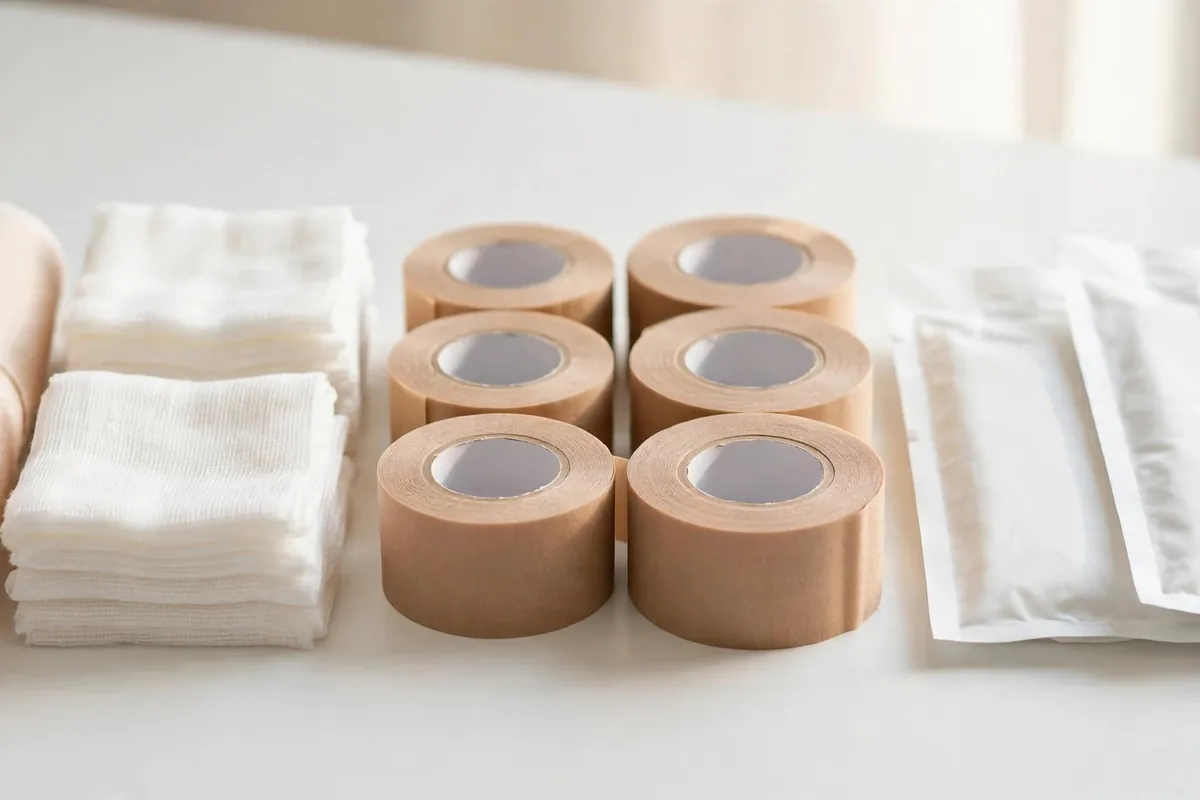
Ostomy pouches, intermittent catheters and wound dressings are bought the way groceries are: a few dollars at a time, every month, for years. Medicare pays for them per item — an intermittent catheter at a median of $2.46 each, an ostomy skin barrier at $8.84 — under a prosthetic and supplies benefit with standard monthly quantities. Multiplied by a month of real use, those small numbers become a real bill, and whether your supplier accepts assignment decides how much of it is yours.
This guide gives the per-item amounts from the federal fee schedule, Medicare’s usual maximum quantities, and two worked monthly examples. It also answers the question asked most often about this category — about incontinence briefs — honestly, at the end.
Contents
- What Medicare allows per item
- Usual maximum quantities
- What a month actually costs: two examples
- The rules behind each supply type
- Assignment matters more here, not less
- Finding a supplier
- Common questions
What Medicare allows per item
The amounts below are medians from the CMS DMEPOS fee schedule for the three supply categories.1 Unlike CPAP or hospital-bed rentals, supply prices vary only slightly by state — the ranges shown are the full spread across all states in the current schedule.
| Item | Code | Medicare allows | Your 20% |
|---|---|---|---|
| Intermittent urinary catheter, straight tip | A4351 | $2.46 each | $0.49 |
| Intermittent urinary catheter, coude tip | A4352 | $9.15 each | $1.83 |
| Intermittent catheter kit with supplies | A4353 | $9.99 each | $2.00 |
| Sterile lubricant, per packet | A4332 | $0.15 | $0.03 |
| Ostomy skin barrier, convex | A4409 | $8.84 each | $1.77 |
| Ostomy skin barrier, solid, extended wear | A4385 | $7.26 each | $1.45 |
| Ostomy pouch, for barrier with flange | A4419 | $2.46 each | $0.49 |
| Skin barrier wipes | A5120 | $0.35 each | $0.07 |
| Alginate wound dressing, up to 16 sq in | A6196 | $10.49 each | $2.10 |
| Alginate wound dressing, 16–48 sq in | A6197 | $23.44 each | $4.69 |
| Sterile gauze pad, up to 16 sq in | A6402 | $0.15 | $0.03 |
| Conforming bandage, per yard | A6446 | $0.55 | $0.11 |
Median state amounts; the full state ranges are narrow — for example the straight-tip catheter runs $1.61–$2.58 across all states, and the convex barrier $8.84–$10.60. The 20% column assumes the deductible has been met and the supplier accepts assignment.
Usual maximum quantities
Medicare publishes usual maximum quantities for high-use supplies. Quantities up to these levels are routinely covered with the right documentation; quantities above them need specific medical justification in your record:
- Intermittent catheters: up to 200 per month (sterile single-use catheters are not reused).
- Ostomy pouches: up to 20 drainable pouches, or 60 closed pouches, per month.
- Ostomy skin barriers: up to 20 per month.
- Wound dressings: quantities follow the wound’s size, type and drainage as documented — there is no single national number, which is why the clinician’s wound notes matter.
What a month actually costs: two examples
Self-catheterisation, five times a day. That is about 150 straight-tip catheters a month. At the median $2.46, approved charges are $369.00 a month; with an assigned supplier your 20% is $73.80 a month. With a supplier who does not accept assignment and prices above the schedule, the same month can cost substantially more, paid up front.
Ostomy care, typical use. Nine convex barriers ($8.84) and fifteen drainable pouches ($2.46) a month come to $116.46 of approved charges; your 20% with assignment is $23.29 a month. Neither example is extreme — which is the point. Supplies are where small percentages stop being small.
The rules behind each supply type
Ostomy supplies are covered under Medicare’s prosthetic benefit for people who have had a colostomy, ileostomy or urostomy. The type and quantity follow the stoma and its output, as documented by your clinician.
Urological supplies — intermittent catheters above all — are covered for permanent urinary incontinence or permanent retention, where “permanent” means the condition is not expected to resolve in the near term. Coude-tip catheters and sterile kits have their own documentation points (for example, an enlarged prostate for the coude tip), which your supplier will check before shipping.
Surgical dressings are covered for qualifying wounds — surgical wounds, and wounds that have been debrided — with the dressing type and change frequency matched to the wound. They are not covered for minor cuts, skin tears or first-aid use, however genuine the need feels; the wound’s documented status is the whole ballgame.
Assignment matters more here, not less
For a one-off purchase, a non-assigned supplier costs you extra once. For supplies, the same percentage repeats every month for as long as you need them — and these are needs measured in years. In this directory, about 27% of ostomy suppliers, 33% of urological suppliers and 28% of dressing suppliers accept assignment. If your current supplier does not and your monthly 20% looks nothing like the examples above, getting comparative quotes is not disloyalty; it is arithmetic.
Finding a supplier
Supplies are a long relationship, not a one-off purchase, and this directory lists them in depth: 26,122 suppliers for ostomy supplies, 21,063 for urological supplies and 26,910 for surgical dressings. The largest numbers are in California, Texas, New York and Florida — or browse all 50 states. City pages narrow it further: Los Angeles, for example, or Houston.
On each listing you can see whether the supplier accepts assignment — about 27% of ostomy suppliers, 33% of urological suppliers and 28% of dressing suppliers do — and reviews from other patients. For supplies that ship every month for years, that assignment difference is worth more than any single month’s price. Confirm the assignment status, the brands carried and the monthly quantity before the first shipment.
Common questions
Does Medicare cover adult incontinence briefs or pads?
No. Disposable absorbent briefs, pads and underpads for incontinence are not a Medicare benefit, and no supplier can bill them to Medicare however they are described. What Medicare does cover is the clinical route — catheters and urological supplies for documented, permanent incontinence or retention — which is why the distinction matters financially.
Why did my shipment include more than I use?
Supplies should be shipped against your documented usage, up to the usual maximums — not at the maximum by default. Tell the supplier to match shipments to your actual use; excess stock billed to Medicare is a compliance problem for them and a warning sign for you.
Can I change brands?
Medicare pays the fee amount regardless of brand within a code. Suppliers stock a range of brands; if a specific brand is clinically necessary — skin reactions are the common case — have your clinician document it.
Do supplies count toward the Part B deductible?
Yes. Early in the year, before the $283 deductible (2026) is met, you may pay the full approved amounts until it is; the 80/20 split applies after that.
References
- CMS DMEPOS Fee Schedule, “Ostomy Supplies”, “Urological Supplies” and “Surgical Dressings” fee categories (codes as tabled), as extracted from the MedicineContact database, November 6, 2026.
- Medicare.gov, “Ostomy supplies” and “Urological supplies” coverage pages — medicare.gov. Usual maximum quantities per CMS and Medicare Administrative Contractor policy articles for ostomy and urological supplies.
- Supplier counts and assignment status: CMS DMEPOS enrollment data as published in the MedicineContact directory, November 2026.
This guide is general information about Medicare coverage and costs, not medical advice and not a coverage decision for any individual. Fee-schedule amounts are those published by CMS and change periodically; suppliers’ own charges may differ. Confirm your coverage and expected costs with your supplier and with Medicare at 1-800-MEDICARE (1-800-633-4227) or Medicare.gov before ordering equipment. MedicineContact is an independent directory of Medicare-enrolled suppliers. It is not affiliated with Medicare, CMS, or any government agency, and listing a supplier here is not an endorsement of that supplier.