
JUDISCH VISION PC
Accepts Medicare AssignmentAccepts AssignmentOn covered items you generally pay the Part B deductible plus 20% of the Medicare-approved amount.
Opening hoursShow opening hours
About JUDISCH VISION PC
Eyewear is the sole focus of Judisch Vision PC, the Gowrie, Iowa practice. Enrolled in Medicare since 1994, Judisch Vision PC accepts Medicare assignment. The operation runs under President Jonathan Judisch. Patients in Gowrie can contact the supplier directly to confirm coverage and availability. Anyone comparing suppliers in Gowrie will find its federal record listed in this directory.
Location
Open in Google Maps ↗Supplies & Services 1
MEDICARE COVERAGE & PATIENT GUIDE
Medicare Guide for GOWRIE Patients
-
Orthotics, Prosthetics & Eyewear:
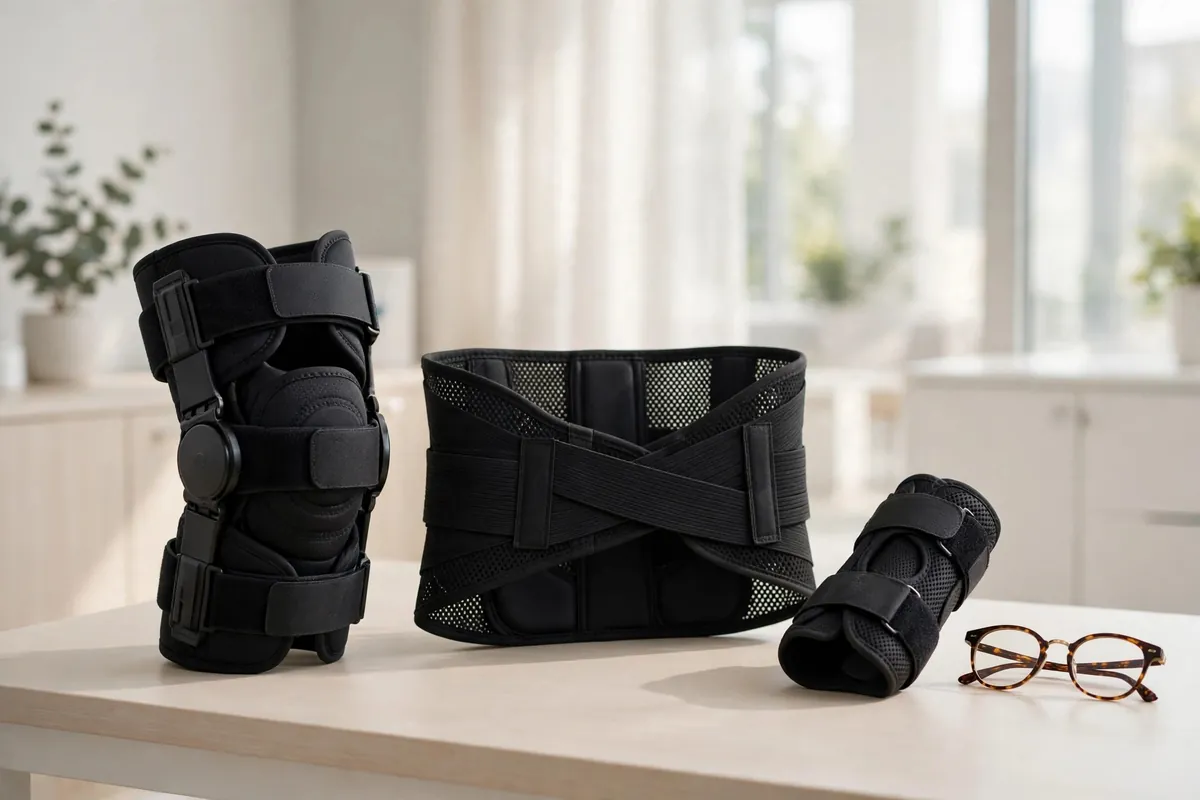
Medicare Part B covers artificial limbs and eyes, braces, and certain eyewear in GOWRIE when they replace a missing body part or support a weakened one. Items wanted mainly for comfort or appearance are not covered.
What Medicare typically looks for:
- Leg, arm, back and neck braces are covered when your doctor documents that the brace is needed to support a weak, deformed or injured body part, or to hold it in the correct position.
- Artificial limbs and eyes are covered when the body part is missing or no longer functions; medically necessary repairs and replacements are covered when your physical condition changes.
- After cataract surgery in which a lens is implanted, Medicare covers one pair of conventional eyeglasses or contact lenses for that eye.
- Breast prostheses and mastectomy bras are covered after mastectomy surgery.
JUDISCH VISION PC accepts Medicare assignment, so for covered items you pay only the Part B deductible and 20% coinsurance of the Medicare-approved amount.
Before your doctor visit
Most Medicare equipment delays are paperwork delays, not medical ones. The appointment where your doctor orders your equipment goes much further when you prepare for it — here is how.
Bring to every appointment
- Your Medicare card and a photo ID. The supplier copies your Medicare Beneficiary Identifier (MBI) exactly as printed, so bring the red, white and blue card itself — not just the number from memory.
- A list of your current medicines, and of any treatments or simpler equipment you have already tried for this problem. Your doctor's notes should show why those options are not enough.
- Recent test results and records connected with the equipment — lab work, sleep studies, therapy or hospital notes. Bring copies if you have them; records from another doctor's office often take days to transfer.
- The name of the supplier you plan to use — JUDISCH VISION PC in GOWRIE — and ask the office to send the order and the visit notes directly to the supplier. Paperwork that sits in a chart is the most common cause of delays.
- Before you leave, ask whether the written order is complete. Medicare requires every equipment order to show your name or MBI, the order date, a description of the item, the quantity if there is one, and your practitioner's name and real signature — an order missing any of these gets sent back.
- For many higher-cost items — power wheelchairs and some hospital beds, for example — Medicare also requires an in-person visit with your treating practitioner within the 6 months before the order. If your last visit was by phone, or longer ago than that, tell the office when you book.
Getting ready: Orthotics, Prosthetics & Eyewear
- For therapeutic shoes, the appointment that counts is with the doctor who manages your diabetes — that doctor must certify your diabetes care and document a qualifying foot condition, so bring your diabetes history and be ready for a foot exam.
- Mention any previous foot ulcer, amputation, deformity, poor circulation or heavy callus, and bring the shoes and inserts you wear now. These findings need to be in your record, not just mentioned in conversation.
- For braces, show your doctor where the joint gives way or is deformed — Medicare looks for documented instability or deformity, and the type of fitting (custom-fitted or off-the-shelf) must match what the record supports.
Before you call JUDISCH VISION PC
Five minutes of preparation makes this call go further — the supplier can check your eligibility, confirm your likely costs and start the paperwork on the first try.
Have these ready
- Your Medicare card. The supplier will ask for your Medicare Beneficiary Identifier (MBI), exactly as printed on the card, to check that you are eligible.
- Your doctor's name, and the date of the visit where the equipment was discussed or ordered. The supplier will request the order and visit notes from that office — usually they handle the chasing for you.
- Your Medicare Advantage or other insurance card, if you have one. Plans other than Original Medicare can have different rules, networks and costs.
Ask on the call
- Do you accept Medicare assignment for this item? If the supplier accepts assignment, your share is limited to the Part B deductible plus 20% of the Medicare-approved amount.
- Will Medicare rent this item or buy it — and if it is rented, for how many months? Who do I call for servicing while it is rented?
- What is my likely share of the cost? Ask whether you have met your Part B deductible for the year, and for expensive items ask for the estimate in writing.
- What paperwork do you still need from my doctor — and once you have it, how long until the equipment is delivered?
- Do you deliver and set up the equipment, and show me how to use it? Is there any charge for delivery or setup?
- If you are in a Medicare Advantage plan: are you in my plan's network, and does my plan need to approve the order first (prior authorization)? An out-of-network supplier can cost you much more.
After your equipment arrives
Delivery day is not the end of the process. A few checks when the equipment arrives — and knowing who is responsible for what afterwards — can save you money and frustration.
On delivery day
- Check everything against the order before you sign: the right item, the right size, and every part and accessory on the list. You may refuse equipment that is wrong, damaged or incomplete.
- Sign only for what you actually received, and keep your copy of the delivery ticket. If you are asked to sign an Advance Beneficiary Notice (ABN), read it first — it means the supplier thinks Medicare might not pay, and signing can make you responsible for the full cost.
- Ask to be shown how to use, clean and store the equipment, and get the instructions in writing before the driver leaves.
- Keep JUDISCH VISION PC's service number with the equipment — (515) 352-3881 — and call them first if anything breaks or stops working.
Repairs, servicing and refills
- While Medicare is paying rent on equipment, the supplier owns it and is responsible for keeping it in working order — call them first for repairs or servicing during the rental period.
- When a capped-rental item becomes yours after the final rental month, Medicare can still help pay for medically necessary repairs. Keep your delivery paperwork so the supplier can verify the equipment.
- For oxygen, the supplier's duty lasts beyond the rent: after the 36-month rental ends, they must keep providing your oxygen and servicing the equipment for up to 5 years in total.
- Reorder supplies — masks, tubing, filters, dressings, test strips — before you run out. Suppliers usually need a few days, and Medicare pays only for quantities that match your documented need.
If a bill or a denial looks wrong
- Read your Medicare Summary Notice (MSN) and compare it with what you actually received. Wrong items, wrong quantities, and charges for things you never received do happen — call the supplier first to fix honest mistakes.
- Still not right? Call 1-800-MEDICARE (1-800-633-4227) and ask for an explanation of the claim.
- You have the right to appeal a decision you disagree with. The first step is called a redetermination, and you generally have 120 days from the date on the notice to request it — the notice itself explains how.
- You do not have to handle this alone: your SHIP program gives free help with bills and appeals. You will find their phone number in the free Medicare help section of this page.
- Protect your Medicare number. Never give it to someone who calls offering 'free' equipment you did not ask about — report suspicious calls to 1-800-MEDICARE.
Coverage and payment depend on medical necessity, eligibility, deductibles, supplier requirements, and applicable Medicare rules. Confirm benefits and any authorization requirements with Medicare or the provider.
FEDERAL REGISTRY & COMPLIANCE
CMS Federal Verification & Compliance Profile
Official federal enrollment, administrative identifiers, and executive registry.
National Provider ID (NPI)
Registered Specialties & Licenses
Optometrist
Executive Leadership (E-E-A-T)
JONATHAN PAUL JUDISCH — President
Also Registered As
ROCK JUDISCH VISION CLINIC PC
CMS Provider ID (DMEPOS)
Medicare Enrollment & Status
Active Standing
Pricing & Bidding Compliance
NPI Registration
Registered since 2007
Federal Exclusion Check
Not excluded from federal programs
Registry details are displayed from the supplied provider data. Verify current enrollment and contract status with the relevant federal source before relying on them for billing or coverage decisions.
LOCAL COMMUNITY HEALTH DATA
Local Community Health & Demographic Profile
Public health benchmarks and chronic disease prevalence within ZIP Code 50543.
JUDISCH VISION PC is a vision care practice in Gowrie, Iowa, serving a small rural community where local access to preventive eye care and corrective eyewear is a practical health and daily-living need. The practice’s specialization in prosthetic lenses and conventional eyeglasses, together with its acceptance of Medicare assignment, aligns with a patient population that values accessible, community-based vision services. Regional public health indicators point to a meaningful burden of vision difficulty and elevated prevalence of diabetes, high blood pressure, and high cholesterol—conditions that do not define individual patients but help explain why routine eye examinations, timely refractive correction, and care coordination remain important. Well-fitted eyeglasses can support reading, driving, work, and independence, while regular eye care visits provide a natural touchpoint for broader health awareness. Public health benchmarks reflect regional community context and do not measure individual treatment demand or direct medication orders.
Total Population
1,359
Residents in this ZIP/ZCTA
Population Age 18+
1,056
Residents aged 18 and older
Key Health Metrics
Selected indicatorsHigh Blood Pressure
High blood pressure is a common chronic condition with potential implications for ocular health, and its prevalence helps frame the importance of routine eye examinations in the community. Elevated blood pressure can be associated with changes in the retinal vasculature, so eye care visits may provide an opportunity for patients to stay attentive to their overall health and follow through with primary care recommendations. For a practice supplying conventional eyeglasses, the relevance lies less in treating hypertension and more in maintaining a trusted local vision care relationship that supports regular visits, accurate refraction, and visual comfort. This community benchmark should not be read as a diagnosis or as evidence that an individual patient needs a particular eyewear product or medical intervention.
Vision Difficulty
The VISION indicator represents the share of adults in the community who report vision difficulty or a vision-related disability, making it the most directly relevant benchmark for a practice centered on conventional eyeglasses and prosthetic lenses. Even a modest community prevalence can translate into demand for accurate refraction, comfortable lens fitting, and practical eyewear that supports everyday tasks such as reading, driving, and maintaining independence. For JUDISCH VISION PC, this indicator reinforces the value of offering reliable, locally accessible eyewear options and clear guidance on when updated prescriptions or follow-up eye care may be appropriate. It should be interpreted as a community-level signal of visual function needs rather than a measure of any individual patient’s prescription requirement.
Diabetes
Diabetes prevalence is an important context indicator for vision care because diabetes can affect ocular health over time and often requires regular dilated eye examinations as part of comprehensive disease management. In a rural community such as Gowrie, a higher diabetes burden can increase the need for coordinated eye care, patient education, and reliable visual correction that helps people maintain daily routines. JUDISCH VISION PC’s conventional eyeglasses do not treat diabetes, but well-fitted eyewear can support functional vision, and the practice can serve as a consistent touchpoint that encourages patients to remain engaged with recommended eye exams and their broader care team. This indicator reflects regional population health context and does not confirm that any individual patient has diabetes or requires a specific treatment.
High Cholesterol
The high cholesterol indicator reflects the proportion of adults in the region with elevated cholesterol, a condition that can coexist with other cardiovascular risk factors and is relevant to comprehensive preventive care. While cholesterol levels are not measured through an eyeglass prescription, routine vision visits can reinforce the value of whole-person health awareness and encourage patients to keep up with recommended primary care screenings and eye examinations. For JUDISCH VISION PC, this context supports a practice approach that pairs dependable conventional eyeglasses with clear communication about follow-up care and the importance of visual comfort and safety. It is a population-level indicator only and should not be interpreted as an individual clinical finding, treatment recommendation, or direct driver of medication orders.
How ZIP 50543 Compares With Iowa
CDC PLACES 2025 · vs state averageState average is the population-weighted average across all ZIP code areas in Iowa in the same CDC release. Figures are model-based CDC estimates for the adult population each measure covers, not counts of diagnosed patients.
Source: CDC PLACES ZCTA Public Health Dataset (2025 Release).
MEDICARE FEE SCHEDULE RANGES
What Medicare Allows in Iowa
The range of amounts Medicare allows for the most common covered items in each category this supplier is authorized to bill for. A reference for comparing costs — not a price quote from this supplier.
Source: CMS DMEPOS Fee Schedule, October 2026. Each range spans the lowest and highest amounts Medicare published in Iowa (non-rural and rural rates) for the common covered items in that category. Amounts are per single item or unit, or the monthly rental for equipment Medicare rents. They are Medicare’s allowances, not this supplier’s prices and not what you would pay: your share depends on the Part B deductible, the 20% coinsurance, whether the supplier accepts assignment, and any supplemental coverage. Prescription drug categories and tube-feeding (enteral/parenteral) nutrition are not shown because Medicare pays for them under different schedules. The payment type shown for a category is Medicare’s payment category for the main equipment in that category, taken from the same fee schedule; individual supplies within a category can be paid differently, and the supplier can confirm how a specific item is handled. Item amounts shown under a category are this state’s non-rural rates for those specific items. Always confirm the exact price with the supplier before ordering.
FREE STATE & FEDERAL HELP
Free Medicare Help in Iowa
Free counseling and state programs that can lower what you pay for Medicare and prescription drugs.
Free Medicare Counseling (SHIP)
Senior Health Insurance Information Program (SHIIP)
Trained counselors in Iowa provide free, unbiased help with Medicare: comparing plans, understanding bills and notices, and finding programs that lower your costs. SHIP counselors do not sell insurance and never charge for help.
TTY: 1-800-735-2942
1-800-351-4664SHIP is a federally funded counseling program (Administration for Community Living); contacts follow the national SHIP directory at shiphelp.org. State program details and income limits can change, so please confirm eligibility with the program before applying.
COMMON QUESTIONS
Frequently Asked Questions
Straight answers drawn from this supplier’s federal record.
Is JUDISCH VISION PC a Medicare-enrolled supplier?
Yes. JUDISCH VISION PC is listed in the federal CMS directory of Medicare DMEPOS suppliers, with Medicare participation beginning in 1994, and is registered under NPI 1689725582. Enrollment means the supplier is authorized to bill Medicare for covered equipment and supplies, subject to Medicare coverage rules.
What does JUDISCH VISION PC bill Medicare for?
JUDISCH VISION PC is authorized to bill Medicare for 1 category, including Prosthetic Lenses: Conventional Eyeglasses. Authorization to bill for a category is not a guarantee of stock on a given day, so call ahead to confirm availability.
Does JUDISCH VISION PC accept Medicare assignment?
Yes. JUDISCH VISION PC accepts Medicare assignment, so for covered items your share is generally the Part B deductible plus 20% coinsurance of the Medicare-approved amount.
How do I contact JUDISCH VISION PC?
You can reach JUDISCH VISION PC by phone at (515) 352-3881. The practice is located at 1800 MAIN ST, Gowrie, IA 50543. Call ahead to confirm current hours and what you should bring.
What does Medicare allow for Prosthetic Lenses: Conventional Eyeglasses in Iowa?
In Iowa, Medicare-approved amounts for Prosthetic Lenses: Conventional Eyeglasses run $42 – $109 (October 2026 fee schedule). For example, Vision svcs frames purchases (V2020) is $80.87. Medicare pays for these as a purchase. They are fitted — or custom-made — for you, and they become yours. The approved amount is the ceiling Medicare allows, not a shelf price; when a supplier accepts assignment, your share is generally the Part B deductible plus 20% of that amount.
What does Medicare require for Orthotics, Prosthetics & Eyewear coverage?
Medicare Part B covers artificial limbs and eyes, braces, and certain eyewear in Gowrie when they replace a missing body part or support a weakened one. Items wanted mainly for comfort or appearance are not covered. In particular: Leg, arm, back and neck braces are covered when your doctor documents that the brace is needed to support a weak, deformed or injured body part, or to hold it in the correct position.
Where can I get free help with Medicare in Iowa?
Senior Health Insurance Information Program (SHIIP) offers free, unbiased Medicare counseling in Iowa as part of the national SHIP network. Call 1-800-351-4664 for help comparing coverage, understanding a bill or appealing a denial.
Reviews for JUDISCH VISION PC (1)
What patients say on Google — the newest reviews patients and carers have left for JUDISCH VISION PC, shown as written. MedicineContact does not edit patient reviews.
Great small town clinic
Showing all 1 reviews for this supplier.
View this supplier on Google MapsPatient reviews collected from Google in November 2026, shown as written — MedicineContact does not edit them. Ratings and counts can change on Google at any time.