
THE MEDICINE PLACE
Accepts Medicare AssignmentAccepts AssignmentOn covered items you generally pay the Part B deductible plus 20% of the Medicare-approved amount.
Opening hoursShow opening hours
About THE MEDICINE PLACE
In small-town Phoenix, New York, The Medicine Place is part of the local furniture. It bills Medicare for walkers, wheelchairs, and other mobility equipment, wound care and incontinence supplies, and more — 11 categories in all. Enrolled in Medicare since 2010, The Medicine Place accepts Medicare assignment. Federal records list its authorized official as David Dingman, President.
Location
Open in Google Maps ↗Supplies & Services 11
MEDICARE COVERAGE & PATIENT GUIDE
Medicare Guide for PHOENIX Patients
-
Mobility & Wheelchair Equipment:
Medicare covers canes, walkers, wheelchairs and scooters in PHOENIX when they are needed for daily activities inside your home — not mainly for use outdoors — and covers only the least costly device that safely meets the need.
What Medicare typically looks for:
- Your treating doctor must examine you face-to-face and document that your mobility problem significantly limits mobility-related activities of daily living at home, such as toileting, dressing, bathing, grooming or eating.
- For a scooter or power wheelchair, your record must also show that a cane, walker or manual wheelchair cannot meet the need safely, and that you — or a caregiver who is always available — can operate the power device safely.
- Your home must have adequate access, floor surfaces and maneuvering room for the device; the supplier typically confirms this before delivery.
- Complex rehabilitative wheelchairs usually require an additional in-person evaluation by a licensed physical or occupational therapist.
-
Wound Care & Incontinence:
Medicare covers wound dressings, ostomy pouches and urinary supplies in PHOENIX when they are tied to a documented wound, stoma or permanent bladder problem — they are not covered for everyday convenience or for minor skin care.
What Medicare typically looks for:
- Surgical dressings are covered for wounds that were treated with surgery or cleaned out (debrided) by a clinician. Your record must document the wound's type, size and drainage, which determines the dressing type and quantity Medicare allows.
- Ostomy supplies are covered after colostomy, ileostomy or urostomy surgery, in quantities that match the type and behavior of your stoma.
- Catheters and other urological supplies are covered when loss of bladder control or urinary retention is documented as permanent.
- Negative-pressure wound therapy pumps are covered only for certain chronic wounds — such as advanced pressure ulcers or diabetic foot ulcers — that have not healed with standard treatment first.
-
Respiratory & Sleep Therapy:
For patients in PHOENIX, Medicare Part B treats oxygen, CPAP and other breathing equipment as durable medical equipment. Most devices are rented monthly, and coverage depends on test results and your doctor's documentation — not on the diagnosis alone.
What Medicare typically looks for:
- Home oxygen: a blood test must show severe low oxygen — an arterial oxygen level (PaO2) of 55 mm Hg or lower, or oxygen saturation of 88% or lower. Levels of 56–59 mm Hg (or 89% saturation) can qualify only with certain additional conditions, such as heart failure with fluid build-up, pulmonary hypertension, or a very high red blood cell count.
- CPAP for sleep apnea: a sleep study must show an apnea-hypopnea index (AHI) of 15 or more events per hour, or 5–14 events per hour together with documented problems such as excessive daytime sleepiness, high blood pressure, or heart disease.
- Keeping a CPAP after the first 3 months: you must use it at least 4 hours a night on 70% of nights during the trial period, and your doctor must document at a follow-up visit that it is helping you.
- Nebulizers, suction pumps and ventilators: your treating doctor must document why the specific device is medically required for use in your home.
THE MEDICINE PLACE accepts Medicare assignment, so for covered items you pay only the Part B deductible and 20% coinsurance of the Medicare-approved amount.
Before your doctor visit
Most Medicare equipment delays are paperwork delays, not medical ones. The appointment where your doctor orders your equipment goes much further when you prepare for it — here is how.
Bring to every appointment
- Your Medicare card and a photo ID. The supplier copies your Medicare Beneficiary Identifier (MBI) exactly as printed, so bring the red, white and blue card itself — not just the number from memory.
- A list of your current medicines, and of any treatments or simpler equipment you have already tried for this problem. Your doctor's notes should show why those options are not enough.
- Recent test results and records connected with the equipment — lab work, sleep studies, therapy or hospital notes. Bring copies if you have them; records from another doctor's office often take days to transfer.
- The name of the supplier you plan to use — THE MEDICINE PLACE in PHOENIX — and ask the office to send the order and the visit notes directly to the supplier. Paperwork that sits in a chart is the most common cause of delays.
- Before you leave, ask whether the written order is complete. Medicare requires every equipment order to show your name or MBI, the order date, a description of the item, the quantity if there is one, and your practitioner's name and real signature — an order missing any of these gets sent back.
- For many higher-cost items — power wheelchairs and some hospital beds, for example — Medicare also requires an in-person visit with your treating practitioner within the 6 months before the order. If your last visit was by phone, or longer ago than that, tell the office when you book.
Getting ready: Mobility & Wheelchair Equipment
- This appointment must be in person and focused on your mobility. Your practitioner has to document how your limitation affects daily activities at home — toileting, feeding, dressing, grooming, bathing — and why a cane, walker or manual wheelchair is not enough.
- Timing is strict: the supplier must receive your doctor's order and the exam notes within 45 days after the face-to-face exam. Ask the office to send them within days, not weeks.
- Before the visit, measure your doorways and check the space where the chair will be used and charged. Be ready to discuss your home honestly — Medicare covers power mobility for use inside the home.
Getting ready: Wound Care & Incontinence
- Be ready for the wound to be examined and measured. Dressing coverage depends on the wound's type, size and drainage being in the record, and the wound usually must have been treated with surgery or debridement (cleaning out dead tissue).
- Bring a list of the dressings and supplies you use now, with sizes and how often you change them — the quantities on the order should match what you actually use, no more and no less.
- For ostomy or catheter supplies, bring your surgery history — the type of stoma surgery or the bladder condition, and when it happened — because eligibility is tied to that documented history.
Getting ready: Respiratory & Sleep Therapy
- For a CPAP machine, bring your sleep study results if you have ever had one. Medicare bases CPAP coverage on a sleep test plus an in-person evaluation of your symptoms — if you have never been tested, ask whether a home sleep test is right for you.
- For oxygen, your blood oxygen level usually has to be tested close to when the order is written, often during a visit. Ask whether a new test is needed this time so the result lands in your record.
- Describe your symptoms in everyday terms — breathlessness at rest or while walking, poor sleep, morning headaches. These details belong in the visit notes your supplier will send to Medicare.
Before you call THE MEDICINE PLACE
Five minutes of preparation makes this call go further — the supplier can check your eligibility, confirm your likely costs and start the paperwork on the first try.
Have these ready
- Your Medicare card. The supplier will ask for your Medicare Beneficiary Identifier (MBI), exactly as printed on the card, to check that you are eligible.
- Your doctor's name, and the date of the visit where the equipment was discussed or ordered. The supplier will request the order and visit notes from that office — usually they handle the chasing for you.
- Your Medicare Advantage or other insurance card, if you have one. Plans other than Original Medicare can have different rules, networks and costs.
Ask on the call
- Do you accept Medicare assignment for this item? If the supplier accepts assignment, your share is limited to the Part B deductible plus 20% of the Medicare-approved amount.
- Will Medicare rent this item or buy it — and if it is rented, for how many months? Who do I call for servicing while it is rented?
- What is my likely share of the cost? Ask whether you have met your Part B deductible for the year, and for expensive items ask for the estimate in writing.
- What paperwork do you still need from my doctor — and once you have it, how long until the equipment is delivered?
- Do you deliver and set up the equipment, and show me how to use it? Is there any charge for delivery or setup?
- If you are in a Medicare Advantage plan: are you in my plan's network, and does my plan need to approve the order first (prior authorization)? An out-of-network supplier can cost you much more.
After your equipment arrives
Delivery day is not the end of the process. A few checks when the equipment arrives — and knowing who is responsible for what afterwards — can save you money and frustration.
On delivery day
- Check everything against the order before you sign: the right item, the right size, and every part and accessory on the list. You may refuse equipment that is wrong, damaged or incomplete.
- Sign only for what you actually received, and keep your copy of the delivery ticket. If you are asked to sign an Advance Beneficiary Notice (ABN), read it first — it means the supplier thinks Medicare might not pay, and signing can make you responsible for the full cost.
- Ask to be shown how to use, clean and store the equipment, and get the instructions in writing before the driver leaves.
- Keep THE MEDICINE PLACE's service number with the equipment — (315) 695-4200 — and call them first if anything breaks or stops working.
Repairs, servicing and refills
- While Medicare is paying rent on equipment, the supplier owns it and is responsible for keeping it in working order — call them first for repairs or servicing during the rental period.
- When a capped-rental item becomes yours after the final rental month, Medicare can still help pay for medically necessary repairs. Keep your delivery paperwork so the supplier can verify the equipment.
- For oxygen, the supplier's duty lasts beyond the rent: after the 36-month rental ends, they must keep providing your oxygen and servicing the equipment for up to 5 years in total.
- Reorder supplies — masks, tubing, filters, dressings, test strips — before you run out. Suppliers usually need a few days, and Medicare pays only for quantities that match your documented need.
If a bill or a denial looks wrong
- Read your Medicare Summary Notice (MSN) and compare it with what you actually received. Wrong items, wrong quantities, and charges for things you never received do happen — call the supplier first to fix honest mistakes.
- Still not right? Call 1-800-MEDICARE (1-800-633-4227) and ask for an explanation of the claim.
- You have the right to appeal a decision you disagree with. The first step is called a redetermination, and you generally have 120 days from the date on the notice to request it — the notice itself explains how.
- You do not have to handle this alone: your SHIP program gives free help with bills and appeals. You will find their phone number in the free Medicare help section of this page.
- Protect your Medicare number. Never give it to someone who calls offering 'free' equipment you did not ask about — report suspicious calls to 1-800-MEDICARE.
Coverage and payment depend on medical necessity, eligibility, deductibles, supplier requirements, and applicable Medicare rules. Confirm benefits and any authorization requirements with Medicare or the provider.
FEDERAL REGISTRY & COMPLIANCE
CMS Federal Verification & Compliance Profile
Official federal enrollment, administrative identifiers, and executive registry.
National Provider ID (NPI)
Registered Specialties & Licenses
Pharmacy, Community/Retail Pharmacy
Executive Leadership (E-E-A-T)
DAVID P. DINGMAN — President
Also Registered As
THE MEDICINE PLACE
CMS Provider ID (DMEPOS)
Medicare Enrollment & Status
Active Standing
Pricing & Bidding Compliance
NPI Registration
Registered since 2006
Federal Exclusion Check
Not excluded from federal programs
Registry details are displayed from the supplied provider data. Verify current enrollment and contract status with the relevant federal source before relying on them for billing or coverage decisions.
CMS MEDICARE CLAIMS DATA
Medicare Activity in 2024
Medicare’s own claims records show how much this supplier actually did for Medicare patients in 2024 — the most recent year CMS has published.
What they provided most
They served 11% fewer Medicare patients than in 2022.
The Medicare patients they serve
Their Medicare patients in 2024 were 74 years old on average.
Source: CMS Medicare DMEPOS utilization data (release RY26), calendar year 2024 — Original Medicare (fee-for-service) claims only; Medicare Advantage is not included. Totals are for this supplier’s Medicare provider number (NPI); a supplier with several locations under one NPI reports them together. CMS withholds very small product categories to protect patient privacy. The patient-mix figures are the age and condition shares CMS publishes for this supplier’s own Medicare patients.
LOCAL COMMUNITY HEALTH DATA
Local Community Health & Demographic Profile
Public health benchmarks and chronic disease prevalence within ZIP Code 13135.
Oswego Valley Pharmacy Inc. is an independently owned community pharmacy and durable medical equipment supplier operating on Main Street in Phoenix, New York, serving the 13135 ZIP code and its surrounding rural and small-town communities. The practice has held Medicare enrollment since 2010 and accepts Medicare assignment, a detail that matters in a service area of roughly 6,300 residents — about 4,884 of them adults — where out-of-pocket cost frequently determines whether a mobility aid, glucose meter, or ostomy pouch is obtained promptly or deferred. The supplier's product catalog is deliberately broad for a single storefront: ambulatory aids (canes, crutches, walkers, wheelchair seating and cushions), bath and bedside safety equipment (commodes, urinals, bedpans), off-the-shelf orthoses, diabetes testing supplies, ostomy and urological supplies, tracheotomy and nebulizer equipment, and surgical dressings. That mix aligns closely with the chronic-disease and functional-limitation profile of the region, where modeled adult prevalence estimates place arthritis at 28.7%, obesity at 36.3%, high cholesterol at 37%, high blood pressure at 35.2%, mobility limitation at 13.6%, diagnosed diabetes at 10.7%, and COPD at 7.6%. In practical terms, a storefront supplier that stocks these categories locally reduces the friction of travel, fitting, and resupply for residents managing long-term conditions — an operational advantage distinct from mail-order distribution. The four indicators below were selected because each describes a population pattern that corresponds meaningfully to a specific portion of the supplier's catalog. Disclaimer: these public health benchmarks describe regional community context and modeled population prevalence; they do not measure individual treatment demand, individual clinical need, or direct medication and equipment orders, and they should not be interpreted as diagnostic or prescribing guidance for any individual patient.
Total Population
6,303
Residents in this ZIP/ZCTA
Population Age 18+
4,884
Residents aged 18 and older
Key Health Metrics
Selected indicatorsCOPD
Chronic obstructive pulmonary disease prevalence is modeled at 7.6% of adults in this region — a smaller share than arthritis or diabetes, but one with concentrated equipment implications. COPD management frequently involves inhaled therapies delivered through nebulized medication, which requires compressor units, tubing, masks, and mouthpieces, along with routine replacement of these components. The supplier's nebulizer equipment and supplies line corresponds directly to that recurring need, and tracheotomy supplies serve residents living with more advanced respiratory support. Surgical dressings round out the catalog in ways relevant to wound and skin care that can accompany long-term respiratory illness and reduced mobility. In a region where current smoking is estimated at 14.4% of adults, ongoing demand for respiratory support supplies is a reasonable planning consideration for a community supplier, and local availability reduces the delay between a prescription and a functioning nebulizer setup. This benchmark describes modeled regional prevalence of diagnosed COPD; it does not indicate how many residents currently use nebulized therapy, nor does it represent individual prescription volume or clinical appropriateness of any device.
Diabetes
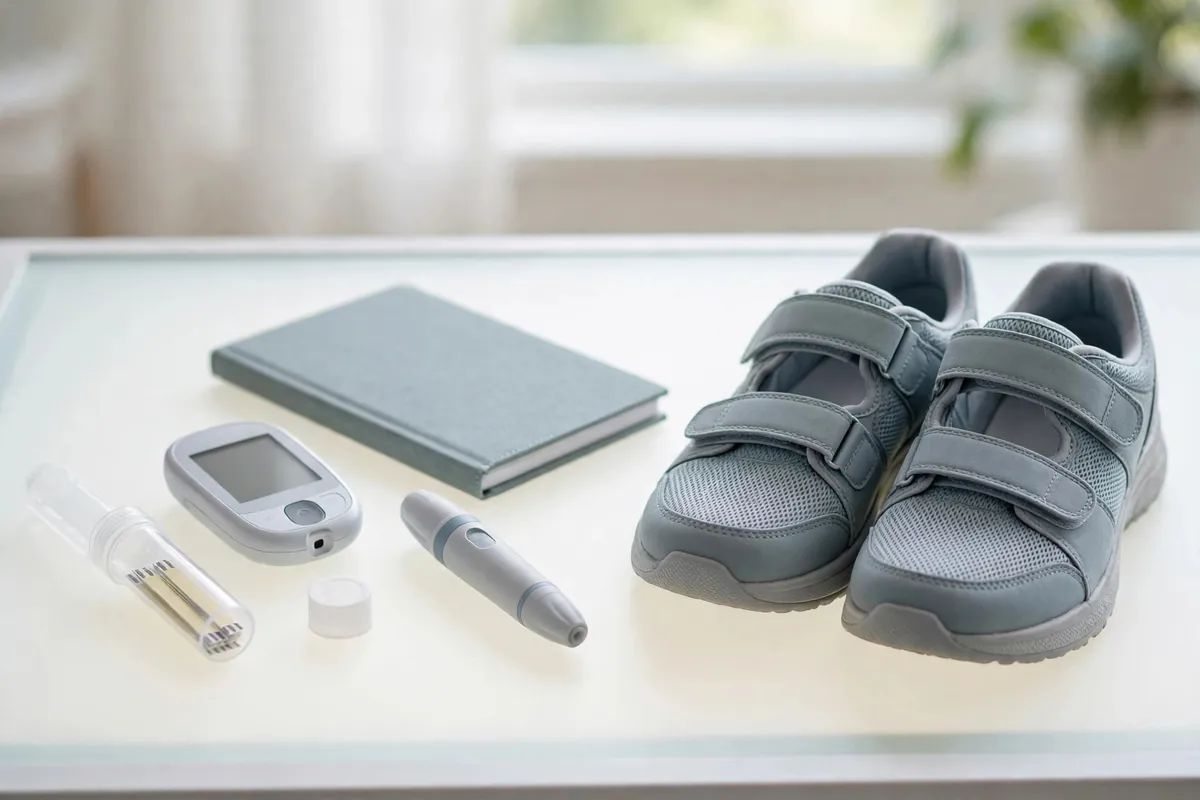
This indicator estimates the percentage of adults in the region with diagnosed diabetes, modeled at 10.7% of the adult population — roughly one in ten residents, or on the order of five hundred adults within the service area. In a small, largely rural community this prevalence carries practical consequences: consistent self-monitoring depends on reliable access to meters, test strips, lancets, and control solution, and gaps in resupply translate into missed readings rather than merely inconvenience. The supplier's non-mail-order blood glucose monitor and supply line is directly positioned against this pattern, and local counter access supports the kind of recurring, low-friction replenishment that sustained monitoring requires. Because the pharmacy accepts Medicare assignment, beneficiaries managing diabetes can obtain testing supplies without the uncertainty of balance billing. Staff familiarity with meter selection, strip compatibility, and documentation requirements adds a layer of practical support that is difficult to replicate through distant distribution channels. The figure describes community prevalence and kit demand drivers; it is not a measure of how many residents require testing supplies at any given time, nor an indicator of individualized clinical management.
Mobility Difficulty
Mobility limitation is modeled here at 13.6% of adults, reflecting the share reporting serious difficulty walking or climbing stairs. This is a functional indicator rather than a disease indicator, and it therefore maps unusually cleanly onto equipment categories: it describes the population for whom ambulation aids and seating support become relevant to maintaining independence. For a supplier serving a dispersed rural population, the ability to obtain, adjust, and replace a walker or cane locally — without shipping delays or a remote fitting conversation — affects whether a resident can continue navigating their own home and community. The supplier's ambulatory line, wheelchair seating and cushions, and bedside equipment such as commodes and urinals all address the practical dimensions of limited mobility, including the transfer and toileting tasks that become harder when walking and stair climbing are restricted. Because the practice accepts Medicare assignment, cost predictability is also part of the access picture. The indicator characterizes community-level functional limitation; it does not measure individual equipment need, eligibility, or the volume of assistive-device orders.
Arthritis
Arthritis prevalence among adults in this region is modeled at 28.7%, meaning nearly three in ten adults live with a diagnosed joint condition — a substantial share of the local adult population and one of the more prominent indicators in this dataset. Arthritis is characteristically associated with pain, stiffness, and gradual loss of range of motion, and it is among the most common reasons adults adopt assistive equipment for daily activity. The supplier's catalog speaks to this pattern across several categories: canes and crutches for load reduction and gait support, walkers for stability during ambulation, off-the-shelf orthoses for bracing and joint support, and wheelchair seating and cushions where prolonged sitting requires pressure management. Commodes, urinals, and bedpans extend that support into nighttime and bathroom routines where joint pain and stiffness can make independent transfers difficult. Off-the-shelf fitting guidance at the counter — cane height, walker adjustment, cushion selection — is a meaningful service differentiator for a supplier embedded in the community. The benchmark reflects regional prevalence patterns among adults; it does not establish that any particular resident requires bracing or ambulatory equipment, nor does it quantify equipment demand.
How ZIP 13135 Compares With New York
CDC PLACES 2025 · vs state averageState average is the population-weighted average across all ZIP code areas in New York in the same CDC release. Figures are model-based CDC estimates for the adult population each measure covers, not counts of diagnosed patients.
Where ZIP 13135 stands in New York
Depression here is higher than 81% of ZIP codes in New York.
Obesity here is higher than 79% of ZIP codes in New York.
Source: CDC PLACES ZCTA Public Health Dataset (2025 Release).
MEDICARE FEE SCHEDULE RANGES
What Medicare Allows in New York
The range of amounts Medicare allows for the most common covered items in each category this supplier is authorized to bill for. A reference for comparing costs — not a price quote from this supplier.
Source: CMS DMEPOS Fee Schedule, October 2026. Each range spans the lowest and highest amounts Medicare published in New York (non-rural and rural rates) for the common covered items in that category. Amounts are per single item or unit, or the monthly rental for equipment Medicare rents. They are Medicare’s allowances, not this supplier’s prices and not what you would pay: your share depends on the Part B deductible, the 20% coinsurance, whether the supplier accepts assignment, and any supplemental coverage. Prescription drug categories and tube-feeding (enteral/parenteral) nutrition are not shown because Medicare pays for them under different schedules. The payment type shown for a category is Medicare’s payment category for the main equipment in that category, taken from the same fee schedule; individual supplies within a category can be paid differently, and the supplier can confirm how a specific item is handled. Item amounts shown under a category are this state’s non-rural rates for those specific items. Always confirm the exact price with the supplier before ordering.
FREE STATE & FEDERAL HELP
Free Medicare Help in New York
Free counseling and state programs that can lower what you pay for Medicare and prescription drugs.
Free Medicare Counseling (SHIP)
Health Insurance Information, Counseling and Assistance (HIICAP)
Trained counselors in New York provide free, unbiased help with Medicare: comparing plans, understanding bills and notices, and finding programs that lower your costs. SHIP counselors do not sell insurance and never charge for help.
1-800-701-0501State Help With Drug Costs (SPAP)
Elderly Pharmaceutical Insurance Coverage (EPIC)
For New York residents age 65 and older who are enrolled in a Medicare Part D plan, with income up to $75,000 if single or $100,000 if married. EPIC helps with Part D premiums and drug costs.
TTY: 1-800-290-9138
1-800-332-3742SHIP is a federally funded counseling program (Administration for Community Living); contacts follow the national SHIP directory at shiphelp.org. State program details and income limits can change, so please confirm eligibility with the program before applying.
COMMON QUESTIONS
Frequently Asked Questions
Straight answers drawn from this supplier’s federal record.
Is THE MEDICINE PLACE a Medicare-enrolled supplier?
Yes. THE MEDICINE PLACE is listed in the federal CMS directory of Medicare DMEPOS suppliers, with Medicare participation beginning in 2010, and is registered under NPI 1467481374. Enrollment means the supplier is authorized to bill Medicare for covered equipment and supplies, subject to Medicare coverage rules.
What does THE MEDICINE PLACE bill Medicare for?
THE MEDICINE PLACE is authorized to bill Medicare for 11 categories, including Commodes, Urinals, Bedpans, Blood Glucose Monitors/Supplies (Non-Mail Order), Canes and/or Crutches, Walkers, and 7 more. Authorization to bill for a category is not a guarantee of stock on a given day, so call ahead to confirm availability.
Does THE MEDICINE PLACE accept Medicare assignment?
Yes. THE MEDICINE PLACE accepts Medicare assignment, so for covered items your share is generally the Part B deductible plus 20% coinsurance of the Medicare-approved amount.
How do I contact THE MEDICINE PLACE?
You can reach THE MEDICINE PLACE by phone at (315) 695-4200. The practice is located at 464 MAIN ST, Phoenix, NY 13135. Today (Tuesday), its listed hours are 9 AM–6 PM. Call ahead to confirm current hours and what you should bring.
What does Medicare allow for Canes and/or Crutches in New York?
In New York, Medicare-approved amounts for Canes and/or Crutches run $7.32 – $72.22 (October 2026 fee schedule). For example, Crutch underarm pair no wood (E0114) is $11.01/month. Medicare usually pays for this as a purchase, so you own it from the start. For some lower-cost items you may choose to rent instead — ask the supplier which fits your situation. The approved amount is the ceiling Medicare allows, not a shelf price; when a supplier accepts assignment, your share is generally the Part B deductible plus 20% of that amount.
What does Medicare require for Mobility & Wheelchair Equipment coverage?
Medicare covers canes, walkers, wheelchairs and scooters in Phoenix when they are needed for daily activities inside your home — not mainly for use outdoors — and covers only the least costly device that safely meets the need. In particular: Your treating doctor must examine you face-to-face and document that your mobility problem significantly limits mobility-related activities of daily living at home, such as toileting, dressing, bathing, grooming or eating.
Where can I get free help with Medicare in New York?
Health Insurance Information, Counseling and Assistance (HIICAP) offers free, unbiased Medicare counseling in New York as part of the national SHIP network. Call 1-800-701-0501 for help comparing coverage, understanding a bill or appealing a denial.
Reviews for THE MEDICINE PLACE (63)
What patients say on Google — the newest reviews patients and carers have left for THE MEDICINE PLACE, shown as written. MedicineContact does not edit patient reviews.
THIS pharmacy is hands down second to None. Brad & Tony are outstanding.
Been going here since I moved to New York best pharmacy around very kind hearted people!
Great place always very helpful as well thanks guys 🏁🏁
Love this pharmacy. Friendly, fast, and convenient!
You wouldn't think a pharmacy makes such a huge difference until you are using them all the time. This is the perfect example of small town business. They are so helpful, kind and always go above and beyond to help you. We just moved out of Phoenix but I am still driving to get my script from them!
Excellent pharmacy with friendly, knowledgeable staff!! The pharmacists are proactive, keep me informed, and even coordinate with my physician when there are prescription issues. I’m very glad I chose them as my primary pharmacy.
I can not begin to explain how amazing they are. Not only do they help my grandma with a medication that other pharmacies seem to never have in stock but they go above and beyond for their clients. They are so amazing and sweet. We have our prescriptions delivered because we often have trouble picking up our prescriptions. They have been so amazing and I am forever grateful for them. They even go out of their way to make sure that you have what you need. I really appreciate everything they have been doing for me and my family. They are truly amazing
Showing the 10 newest of 63 reviews.
Read more reviews on Google MapsPatient reviews collected from Google in November 2026, shown as written — MedicineContact does not edit them. Ratings and counts can change on Google at any time.