
OPS
Accepts Medicare AssignmentAccepts AssignmentOn covered items you generally pay the Part B deductible plus 20% of the Medicare-approved amount.
Opening hoursShow opening hours
About OPS
Ops in Hatboro, Pennsylvania does one thing for Medicare patients: eyewear. Ops has been a Medicare supplier since 2017 and accepts Medicare assignment. On Google, it holds 4.8 stars across 375 patient reviews. The operation runs under Billing Manager Robin Brass. Anyone comparing suppliers in Hatboro will find its federal record listed in this directory.
Location
Open in Google Maps ↗Supplies & Services 3
MEDICARE COVERAGE & PATIENT GUIDE
Medicare Guide for HATBORO Patients
-
Orthotics, Prosthetics & Eyewear:
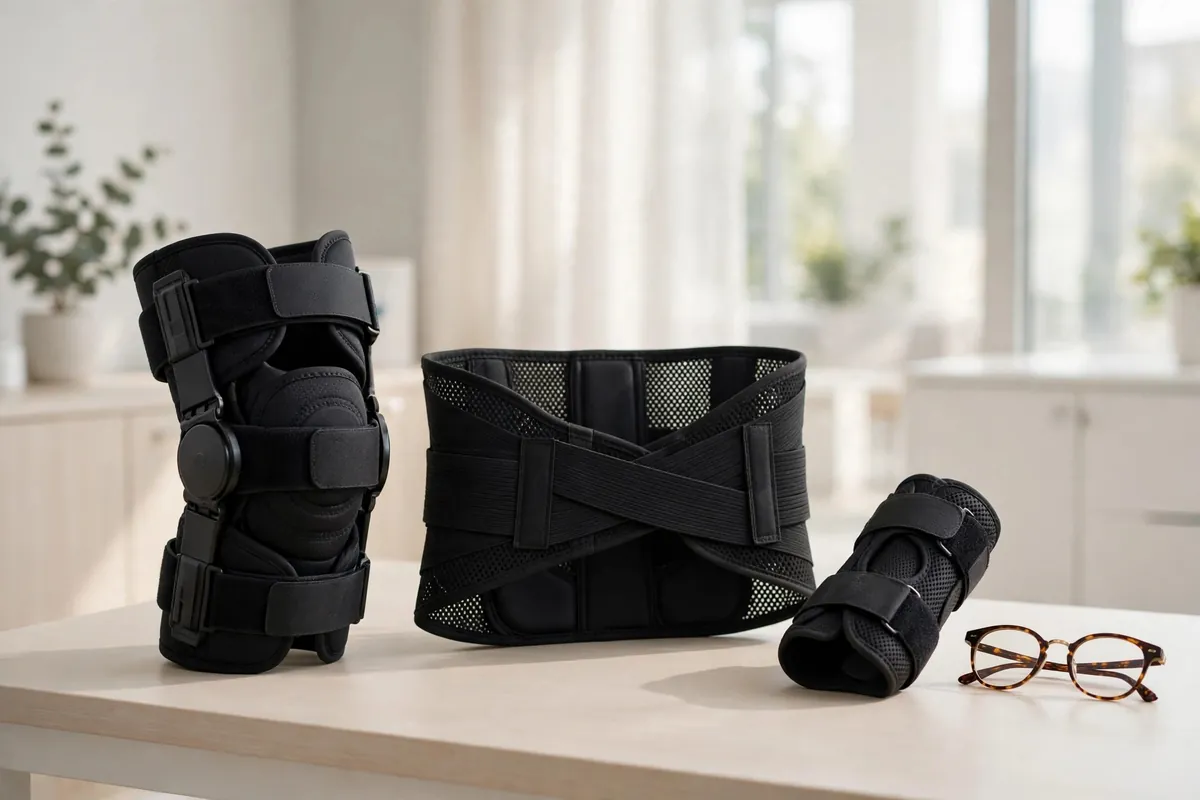
Medicare Part B covers artificial limbs and eyes, braces, and certain eyewear in HATBORO when they replace a missing body part or support a weakened one. Items wanted mainly for comfort or appearance are not covered.
What Medicare typically looks for:
- Leg, arm, back and neck braces are covered when your doctor documents that the brace is needed to support a weak, deformed or injured body part, or to hold it in the correct position.
- Artificial limbs and eyes are covered when the body part is missing or no longer functions; medically necessary repairs and replacements are covered when your physical condition changes.
- After cataract surgery in which a lens is implanted, Medicare covers one pair of conventional eyeglasses or contact lenses for that eye.
- Breast prostheses and mastectomy bras are covered after mastectomy surgery.
OPS accepts Medicare assignment, so for covered items you pay only the Part B deductible and 20% coinsurance of the Medicare-approved amount.
Before your doctor visit
Most Medicare equipment delays are paperwork delays, not medical ones. The appointment where your doctor orders your equipment goes much further when you prepare for it — here is how.
Bring to every appointment
- Your Medicare card and a photo ID. The supplier copies your Medicare Beneficiary Identifier (MBI) exactly as printed, so bring the red, white and blue card itself — not just the number from memory.
- A list of your current medicines, and of any treatments or simpler equipment you have already tried for this problem. Your doctor's notes should show why those options are not enough.
- Recent test results and records connected with the equipment — lab work, sleep studies, therapy or hospital notes. Bring copies if you have them; records from another doctor's office often take days to transfer.
- The name of the supplier you plan to use — OPS in HATBORO — and ask the office to send the order and the visit notes directly to the supplier. Paperwork that sits in a chart is the most common cause of delays.
- Before you leave, ask whether the written order is complete. Medicare requires every equipment order to show your name or MBI, the order date, a description of the item, the quantity if there is one, and your practitioner's name and real signature — an order missing any of these gets sent back.
- For many higher-cost items — power wheelchairs and some hospital beds, for example — Medicare also requires an in-person visit with your treating practitioner within the 6 months before the order. If your last visit was by phone, or longer ago than that, tell the office when you book.
Getting ready: Orthotics, Prosthetics & Eyewear
- For therapeutic shoes, the appointment that counts is with the doctor who manages your diabetes — that doctor must certify your diabetes care and document a qualifying foot condition, so bring your diabetes history and be ready for a foot exam.
- Mention any previous foot ulcer, amputation, deformity, poor circulation or heavy callus, and bring the shoes and inserts you wear now. These findings need to be in your record, not just mentioned in conversation.
- For braces, show your doctor where the joint gives way or is deformed — Medicare looks for documented instability or deformity, and the type of fitting (custom-fitted or off-the-shelf) must match what the record supports.
Before you call OPS
Five minutes of preparation makes this call go further — the supplier can check your eligibility, confirm your likely costs and start the paperwork on the first try.
Have these ready
- Your Medicare card. The supplier will ask for your Medicare Beneficiary Identifier (MBI), exactly as printed on the card, to check that you are eligible.
- Your doctor's name, and the date of the visit where the equipment was discussed or ordered. The supplier will request the order and visit notes from that office — usually they handle the chasing for you.
- Your Medicare Advantage or other insurance card, if you have one. Plans other than Original Medicare can have different rules, networks and costs.
Ask on the call
- Do you accept Medicare assignment for this item? If the supplier accepts assignment, your share is limited to the Part B deductible plus 20% of the Medicare-approved amount.
- Will Medicare rent this item or buy it — and if it is rented, for how many months? Who do I call for servicing while it is rented?
- What is my likely share of the cost? Ask whether you have met your Part B deductible for the year, and for expensive items ask for the estimate in writing.
- What paperwork do you still need from my doctor — and once you have it, how long until the equipment is delivered?
- Do you deliver and set up the equipment, and show me how to use it? Is there any charge for delivery or setup?
- If you are in a Medicare Advantage plan: are you in my plan's network, and does my plan need to approve the order first (prior authorization)? An out-of-network supplier can cost you much more.
After your equipment arrives
Delivery day is not the end of the process. A few checks when the equipment arrives — and knowing who is responsible for what afterwards — can save you money and frustration.
On delivery day
- Check everything against the order before you sign: the right item, the right size, and every part and accessory on the list. You may refuse equipment that is wrong, damaged or incomplete.
- Sign only for what you actually received, and keep your copy of the delivery ticket. If you are asked to sign an Advance Beneficiary Notice (ABN), read it first — it means the supplier thinks Medicare might not pay, and signing can make you responsible for the full cost.
- Ask to be shown how to use, clean and store the equipment, and get the instructions in writing before the driver leaves.
- Keep OPS's service number with the equipment — (215) 672-4300 — and call them first if anything breaks or stops working.
Repairs, servicing and refills
- While Medicare is paying rent on equipment, the supplier owns it and is responsible for keeping it in working order — call them first for repairs or servicing during the rental period.
- When a capped-rental item becomes yours after the final rental month, Medicare can still help pay for medically necessary repairs. Keep your delivery paperwork so the supplier can verify the equipment.
- For oxygen, the supplier's duty lasts beyond the rent: after the 36-month rental ends, they must keep providing your oxygen and servicing the equipment for up to 5 years in total.
- Reorder supplies — masks, tubing, filters, dressings, test strips — before you run out. Suppliers usually need a few days, and Medicare pays only for quantities that match your documented need.
If a bill or a denial looks wrong
- Read your Medicare Summary Notice (MSN) and compare it with what you actually received. Wrong items, wrong quantities, and charges for things you never received do happen — call the supplier first to fix honest mistakes.
- Still not right? Call 1-800-MEDICARE (1-800-633-4227) and ask for an explanation of the claim.
- You have the right to appeal a decision you disagree with. The first step is called a redetermination, and you generally have 120 days from the date on the notice to request it — the notice itself explains how.
- You do not have to handle this alone: your SHIP program gives free help with bills and appeals. You will find their phone number in the free Medicare help section of this page.
- Protect your Medicare number. Never give it to someone who calls offering 'free' equipment you did not ask about — report suspicious calls to 1-800-MEDICARE.
Coverage and payment depend on medical necessity, eligibility, deductibles, supplier requirements, and applicable Medicare rules. Confirm benefits and any authorization requirements with Medicare or the provider.
FEDERAL REGISTRY & COMPLIANCE
CMS Federal Verification & Compliance Profile
Official federal enrollment, administrative identifiers, and executive registry.
National Provider ID (NPI)
Registered Specialties & Licenses
Ophthalmology
- Eyewear Supplier (Equipment, not the service)
- Optometrist (License OE5457P – PA)
Executive Leadership (E-E-A-T)
ROBIN L BRASS — BILLING MANAGER
CMS Provider ID (DMEPOS)
Medicare Enrollment & Status
Active Standing
Pricing & Bidding Compliance
NPI Registration
Registered since 2006
Federal Exclusion Check
Not excluded from federal programs
Registry details are displayed from the supplied provider data. Verify current enrollment and contract status with the relevant federal source before relying on them for billing or coverage decisions.
LOCAL COMMUNITY HEALTH DATA
Local Community Health & Demographic Profile
Public health benchmarks and chronic disease prevalence within ZIP Code 19040.
OPHTHALMOLOGY PHYSICIANS & SURGEONS operates from 331 N York Rd in Hatboro, Pennsylvania, serving ZIP code 19040, a community of roughly **22,396 residents**, of whom **17,828 are adults aged 18 and older**. The practice's Medicare assignment status and its supply specialization in prosthetic lenses — conventional eyeglasses, conventional contact lenses, and prosthetic cataract lenses — position it within the corrective and restorative segment of eye care rather than acute surgical intervention alone. That product mix speaks to a population that is aging, functionally active, and dependent on reliable optical correction for reading, driving, occupational tasks, and screen-based work. The regional health profile captured in the CDC indicators below describes a community with moderate participation in some preventive services, meaningful rates of oral health burden, and a substantial share of adults reporting insufficient sleep. Read together, these indicators sketch the broader preventive-care and chronic-condition environment in which a lens-focused ophthalmology practice operates: patients arriving for refraction and cataract lens fitting are the same adults navigating sleep quality, oral health, and age-appropriate screening decisions. The sections that follow interpret each indicator as regional context for the practice's supply categories. Please note: these public health benchmarks reflect regional community context and do not measure individual treatment demand, individual patient diagnosis, or direct medication or device orders.
Total Population
22,396
Residents in this ZIP/ZCTA
Population Age 18+
17,828
Residents aged 18 and older
Key Health Metrics
Selected indicatorsShort Sleep Duration
This indicator reflects the proportion of adults in the region who report obtaining sufficient sleep, and at **36%** the figure suggests that roughly two-thirds of the adult population is not consistently meeting recommended sleep durations. In practical terms, a community where sleep sufficiency is uncommon tends to report higher rates of daytime fatigue, extended screen exposure during evening hours, and more frequent dry-eye and asthenopic complaints — the tired, gritty, fluctuating-vision symptoms that bring patients into a refraction chair. For a practice whose supply list centers on conventional eyeglasses and contact lenses, this pattern is clinically familiar: fatigued patients often present with blurred vision that is partly refractive and partly tear-film related, and contact lens wearers in particular notice reduced tolerance when sleep is poor. Chronic short sleep is also associated in the literature with systemic conditions relevant to eye health, though the relationship is multifactorial rather than causal. This indicator is best used as context for how the practice frames lens selection and patient education, not as evidence of demand for any specific product.
Dental Visit
This metric captures the share of the population reporting a dental visit within the past year, and at **68.9%** the region sits in a moderate range — a majority engaged in routine oral care, with a still-substantial minority outside regular dental contact. Dental visit frequency is frequently used as a proxy for general engagement with preventive health services, since adults who maintain routine dental appointments tend to be similarly connected to primary care, vision care, and age-appropriate screenings. That makes this indicator informative for an optical practice: the roughly one-third of residents not routinely accessing preventive dental care may also be less likely to schedule periodic comprehensive eye examinations or to update corrective lens prescriptions promptly. Oral and ocular health also intersect through shared systemic risk factors, including diabetes and inflammatory conditions, which carry implications for both periodontal health and retinal and lens status. For a supplier of conventional eyeglasses, contact lenses, and cataract lenses, this indicator supports thinking about outreach and recall strategies for preventative vision care rather than any claim about product need.
Tooth Loss
Severe tooth loss — typically defined as the loss of most or all natural teeth — is reported at **8.6%** in this region, a figure that signals a meaningful burden of advanced oral disease and, often, delayed care. Severe tooth loss clusters in older adults and in people managing chronic conditions such as diabetes, and it frequently co-occurs with other markers of accumulated health burden and reduced access to routine services. For an ophthalmology practice specializing in prosthetic lenses, this indicator is relevant in two ways. First, it identifies a segment of the population likely to be older and managing multiple chronic conditions, a group that overlaps closely with the cataract and presbyopia populations served by prosthetic cataract lenses and conventional eyeglasses. Second, it reinforces the value of the practice's restorative, function-oriented model — the same logic that motivates a patient to replace missing teeth motivates the pursuit of clear, comfortable vision for daily independence. The indicator is contextual and should not be interpreted as a direct measure of optical device need.
Colorectal Cancer Screening
Colorectal cancer screening uptake stands at **69.7%** among eligible adults in this region, indicating that a clear majority participate in at least one recommended screening modality while a notable remainder do not. Because colorectal screening eligibility is strongly age-linked, this indicator is a useful demographic and behavioral signal: it points to a region with a sizeable, actively aging adult population and a mixed pattern of preventive-service engagement. That age structure is directly relevant to an optical supplier whose catalog includes prosthetic cataract lenses, since the prevalence of visually significant cataract and presbyopia rises steadily with age, and the typical cataract lens candidate falls squarely within the age bands where colorectal screening is recommended. The indicator also offers a behavioral lens — communities with stronger screening participation tend to respond well to structured recall and scheduled preventive appointments, which is a useful consideration for how an optical practice sequences comprehensive eye exams and lens replacement cycles. This benchmark describes community-level preventive behavior and does not measure individual clinical need or device orders.
How ZIP 19040 Compares With Pennsylvania
CDC PLACES 2025 · vs state averageState average is the population-weighted average across all ZIP code areas in Pennsylvania in the same CDC release. Figures are model-based CDC estimates for the adult population each measure covers, not counts of diagnosed patients. CDC did not publish 2023-based estimates for Pennsylvania, so this comparison shows the measures CDC carried over for the state from its 2022 survey.
Source: CDC PLACES ZCTA Public Health Dataset (2025 Release).
MEDICARE FEE SCHEDULE RANGES
What Medicare Allows in Pennsylvania
The range of amounts Medicare allows for the most common covered items in each category this supplier is authorized to bill for. A reference for comparing costs — not a price quote from this supplier.
Source: CMS DMEPOS Fee Schedule, October 2026. Each range spans the lowest and highest amounts Medicare published in Pennsylvania (non-rural and rural rates) for the common covered items in that category. Amounts are per single item or unit, or the monthly rental for equipment Medicare rents. They are Medicare’s allowances, not this supplier’s prices and not what you would pay: your share depends on the Part B deductible, the 20% coinsurance, whether the supplier accepts assignment, and any supplemental coverage. Prescription drug categories and tube-feeding (enteral/parenteral) nutrition are not shown because Medicare pays for them under different schedules. The payment type shown for a category is Medicare’s payment category for the main equipment in that category, taken from the same fee schedule; individual supplies within a category can be paid differently, and the supplier can confirm how a specific item is handled. Item amounts shown under a category are this state’s non-rural rates for those specific items. Always confirm the exact price with the supplier before ordering.
FREE STATE & FEDERAL HELP
Free Medicare Help in Pennsylvania
Free counseling and state programs that can lower what you pay for Medicare and prescription drugs.
Free Medicare Counseling (SHIP)
PA MEDI – Pennsylvania Medicare Education and Decision Insight
Trained counselors in Pennsylvania provide free, unbiased help with Medicare: comparing plans, understanding bills and notices, and finding programs that lower your costs. SHIP counselors do not sell insurance and never charge for help.
1-800-783-7067State Help With Drug Costs (SPAP)
PACE & PACENET
Pennsylvania's prescription drug help for residents age 65 and older. PACE works together with Medicare Part D. PACENET serves residents with slightly higher incomes. Income limits apply.
1-800-225-7223SHIP is a federally funded counseling program (Administration for Community Living); contacts follow the national SHIP directory at shiphelp.org. State program details and income limits can change, so please confirm eligibility with the program before applying.
COMMON QUESTIONS
Frequently Asked Questions
Straight answers drawn from this supplier’s federal record.
Is OPS a Medicare-enrolled supplier?
Yes. OPS is listed in the federal CMS directory of Medicare DMEPOS suppliers, with Medicare participation beginning in 2017, and is registered under NPI 1003862459. Enrollment means the supplier is authorized to bill Medicare for covered equipment and supplies, subject to Medicare coverage rules.
What does OPS bill Medicare for?
OPS is authorized to bill Medicare for 3 categories, including Prosthetic Lenses: Conventional Eyeglasses, Prosthetic Lenses: Conventional Contact Lenses, Prosthetic Lenses: Prosthetics Cataract Lenses. Authorization to bill for a category is not a guarantee of stock on a given day, so call ahead to confirm availability.
Does OPS accept Medicare assignment?
Yes. OPS accepts Medicare assignment, so for covered items your share is generally the Part B deductible plus 20% coinsurance of the Medicare-approved amount.
How do I contact OPS?
You can reach OPS by phone at (215) 672-4300. The practice is located at 331 N YORK RD, Hatboro, PA 19040. Today (Tuesday), its listed hours are 8 AM–4 PM. Call ahead to confirm current hours and what you should bring.
What does Medicare allow for Prosthetic Lenses: Conventional Eyeglasses in Pennsylvania?
In Pennsylvania, Medicare-approved amounts for Prosthetic Lenses: Conventional Eyeglasses run $56 – $123 (October 2026 fee schedule). For example, Vision svcs frames purchases (V2020) is $76.76. Medicare pays for these as a purchase. They are fitted — or custom-made — for you, and they become yours. The approved amount is the ceiling Medicare allows, not a shelf price; when a supplier accepts assignment, your share is generally the Part B deductible plus 20% of that amount.
What does Medicare require for Orthotics, Prosthetics & Eyewear coverage?
Medicare Part B covers artificial limbs and eyes, braces, and certain eyewear in Hatboro when they replace a missing body part or support a weakened one. Items wanted mainly for comfort or appearance are not covered. In particular: Leg, arm, back and neck braces are covered when your doctor documents that the brace is needed to support a weak, deformed or injured body part, or to hold it in the correct position.
Where can I get free help with Medicare in Pennsylvania?
PA MEDI – Pennsylvania Medicare Education and Decision Insight offers free, unbiased Medicare counseling in Pennsylvania as part of the national SHIP network. Call 1-800-783-7067 for help comparing coverage, understanding a bill or appealing a denial.
MORE MEDICARE SUPPLIERS
Medicare Suppliers Near Hatboro
Hatboro has 4 Medicare-enrolled DMEPOS suppliers, and 3 of them accept Medicare assignment. Suppliers in the city bill an average of 6.8 supply categories — OPS bills 3.
4 listed suppliers share ZIP code 19040.

Reviews for OPS (375)
What patients say on Google — the newest reviews patients and carers have left for OPS, shown as written. MedicineContact does not edit patient reviews.
Eye exam went very smoothly. Short wait…very knowledgeable and helpful staff. Dr Clark is the best…no pressure and highly skilled ophthalmologist. He previously performed cataract surgery six years ago and everything went exceptionally well
Dr Clark did my Glaucoma surgery several years ago and I’m back to have my cataracts done. Dr Clark is a very experienced and knowledgeable doctor. He explains the course of treatment that he recommends as well as alternatives. He is professional and friendly. He has a very caring personality and is extremely good at explaining exactly what your exam shows as well as the treatment options that he recommends for you. His office is extremely busy, but his staff assists him with some of the testing and they are friendly and very professional. One of my favorite doctors!!
He did my cataract surgery & ruined my right eye. Left me with a wound in my eye that won't heal & requires stitches. Left with low eye pressure, when it was fine before the surgery. He wrote it off as 'normal for me'. WRONG! Stat away!!!
My mom had an appointment, and she was notified a week before as usual, then 2 days prior to her appointment she was left a message that her appointment was cancelled and she would have to find another eye doctor because they no longer accept her insurance. Mind you my mom was a patient of Dr Clark for over 20 years and this was very upsetting to her. First of all if they were no longer accepting certain insurance she could be been notified sooner being as though she has had and still has issues with her eyes. Just another reminder its a sign of the times NO cARE or CONCERN
Dr.clark and his staff are the best .have been going there last twenty five years or more wouldn't go any where else. Couldn't find a more friendlier or caring doctor and staff
Response from the owner
We all appreciate your nice remarks, John.
We are so grateful that you have chosen our office for your eye care needs.
Sincerely,
Francis J. Clark, M.D.
Appointment was given to wrong office other than that Dr and his staff were very good
Always professional; always excellent treatment.
Dr. Francis Clark before he joined refocus. Replaced my cataract lens with a $3000 lens.So I can see fine for the very first time in my life….. And it was great for\n3 months, but started to get a little foggy on the Lens.So the next step
YAG LSERING,= WELL, THE OFFICE WAS UNUSUALLY EMPTY THAT DAY. HE CAME INTO MY ROOM IN RATHER, A HURRY, SHOOK MY HAND SAID, SIT DOWN, PUT YOUR EYE HERE AND STARTED FIRING A LASER IN MY EYE, NEVER TELL ME WHAT HE WAS ABOUT TO DO.AND HIS ASSISTANT WAS IN SHOCK WITH HIS MOUTH OPEN BECAUSE HE SAID YOU DIDN'T SIGN THE RELEASE FORM WHICH I IDIOTICALLY SIGNED BLINDLY AFTER THE PROCESS…OUTCONE RUINED MY LEFT …FROM HURRRYING‼️ EYE. I HAD A BLOODY RETINA, A HOLE IN THE BLUE OF MY EYE. YO THUS DAY‼️
WILLS EYE HOSPITAL GAVE ME 3 OPTIONS TATTOO OVER THE WHOLE OF THE BLUE OF MY EYE.USE SPECIAL DROPS TO SEAL THE HOLE OR SURGERY…… TO THIS DAY, NOTHING'S BEEN DONE.IT'S NO REFLECTION ON REFOCUS IT'S A REFLECTION ON DR. FRANCIS CLARK.
Response from the owner
Hello Robert.
Your great evaluation serves as the perfect impetus for the entire team to work hard to produce outcomes on par with this each and every time. We are ecstatic that you are reaping the rewards and appreciate your excellent review. Good luck in 2023 and beyond!
Dr.Francis Clark & Staff.
Very kind, friendly and professional. Only been a patient for 29 years and have seen him every 4-6 months since then.
Response from the owner
Greetings, Donna.
We appreciate you taking the time to write such a wonderful review for us. We're overjoyed that you had a positive experience at our office. Our top goal is making sure you are satisfied.
We appreciate your nice sentiments once more and hope to see you soon.
Heartfelt Regards,
Francis Clark, MD.
Response from the owner
Hello, Claudia.
We appreciate your thoughtful review.
We value your patronage of our practice and the time you invested in writing this excellent Review.
With warmest regards,
Francis James Clark, MD.
Showing the 10 newest of 375 reviews.
Read more reviews on Google MapsPatient reviews collected from Google in November 2026, shown as written — MedicineContact does not edit them. Ratings and counts can change on Google at any time.