
SOUTH TEXAS BONE AND JOINT
Accepts Medicare AssignmentAccepts AssignmentOn covered items you generally pay the Part B deductible plus 20% of the Medicare-approved amount.
Opening hoursShow opening hours
About SOUTH TEXAS BONE AND JOINT
Three decades on Medicare's rolls give South Texas Bone and Joint in Corpus Christi, Texas a long memory. South Texas Bone and Joint has been a Medicare supplier since 1989 and accepts Medicare assignment. It bills Medicare for Part B prescription drugs, orthotics, prosthetics, and eyewear, and more — 13 categories in all. Weekday hours run 8 AM–5 PM. The operation runs under Credentialing Specialist Sara de la Garza.
Location
Open in Google Maps ↗Supplies & Services 13
MEDICARE COVERAGE & PATIENT GUIDE
Medicare Guide for CORPUS CHRISTI Patients
-
Medicare Part B Drugs:
Only a limited set of prescription drugs is covered under Part B instead of Part D for patients in CORPUS CHRISTI — mainly drugs given through medical equipment, plus a few categories named in the law. Each drug has its own strict conditions.
What Medicare typically looks for:
- Inhalation (nebulizer) drugs are covered only when administered at home through a Medicare-covered nebulizer.
- Immunosuppressive drugs are covered after an organ transplant that Medicare helped pay for, for as long as you need them to prevent rejection.
- Oral anticancer drugs are covered when the same active ingredient is also available in an injectable form; oral anti-nausea drugs are covered only as a full replacement for IV drugs given within 48 hours of chemotherapy.
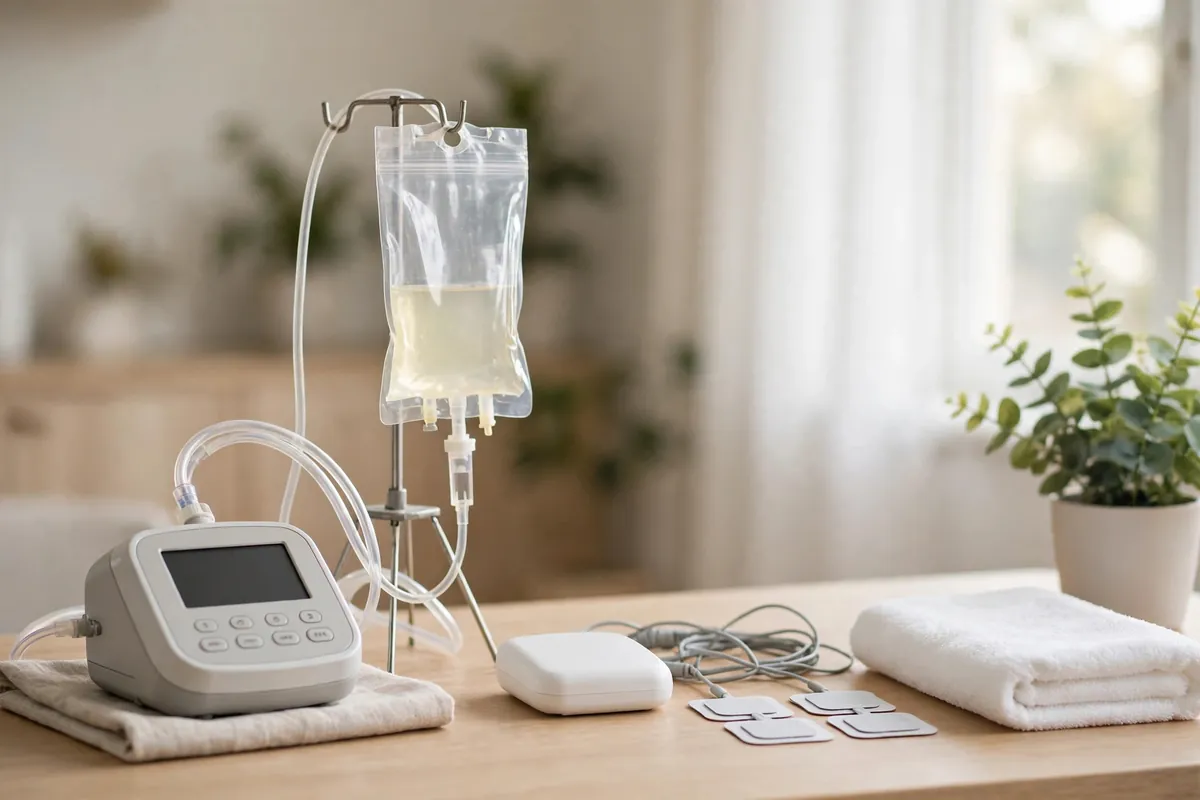
- Drugs delivered through a home infusion pump are covered only when both the pump and the drug are medically necessary for your condition. Epoetin is covered for anemia tied to kidney disease or certain cancer treatments, under its own criteria.
-
Orthotics, Prosthetics & Eyewear:
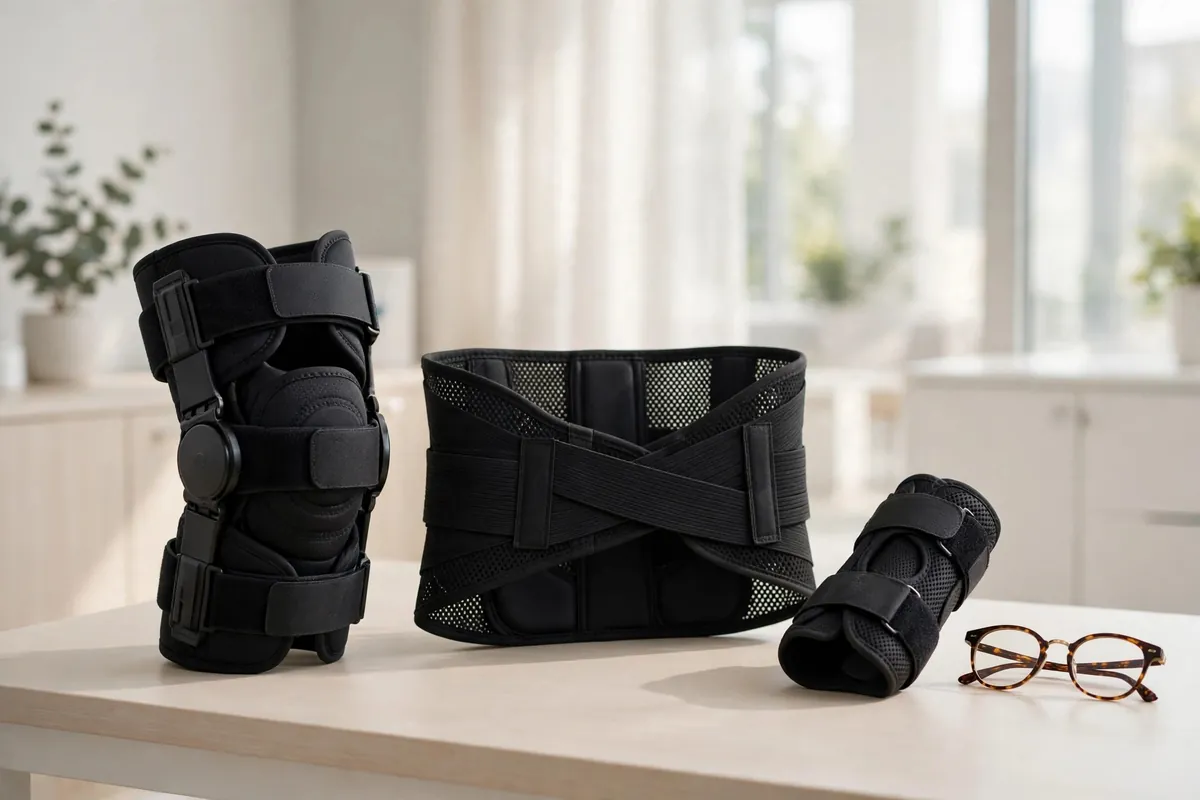
Medicare Part B covers artificial limbs and eyes, braces, and certain eyewear in CORPUS CHRISTI when they replace a missing body part or support a weakened one. Items wanted mainly for comfort or appearance are not covered.
What Medicare typically looks for:
- Leg, arm, back and neck braces are covered when your doctor documents that the brace is needed to support a weak, deformed or injured body part, or to hold it in the correct position.
- Artificial limbs and eyes are covered when the body part is missing or no longer functions; medically necessary repairs and replacements are covered when your physical condition changes.
- After cataract surgery in which a lens is implanted, Medicare covers one pair of conventional eyeglasses or contact lenses for that eye.
- Breast prostheses and mastectomy bras are covered after mastectomy surgery.
-
Specialized Clinical & Therapy Devices:
This group covers very different items — tube feeding, infusion pumps, compression garments, speech devices and stimulators — and each has its own Medicare rule book in CORPUS CHRISTI. A few of the best-known rules:
What Medicare typically looks for:
- Tube feeding (enteral nutrition) is covered under Medicare's prosthetic-device benefit only when part of your digestive tract permanently does not function and you must be fed through a tube to maintain weight and strength; the condition must be expected to last at least 3 months. Nutritional drinks taken by mouth are not covered. IV (parenteral) nutrition follows the same permanence rule.
- Since January 2024, gradient compression garments and wraps are covered when you have a diagnosis of lymphedema: up to 3 daytime garments or wraps per affected body part every 6 months, and 2 nighttime garments per body part every 2 years.
- Speech-generating devices are covered when an evaluation by a speech-language pathologist documents a severe speech impairment and that the device is needed as your main way to communicate.
- Bone-growth (osteogenesis) stimulators are covered mainly for certain fractures that have failed to heal or failed spinal fusion surgery. TENS units are covered for chronic, hard-to-treat pain that has not responded to other treatments, usually after a trial rental period.
SOUTH TEXAS BONE AND JOINT accepts Medicare assignment, so for covered items you pay only the Part B deductible and 20% coinsurance of the Medicare-approved amount.
Before your doctor visit
Most Medicare equipment delays are paperwork delays, not medical ones. The appointment where your doctor orders your equipment goes much further when you prepare for it — here is how.
Bring to every appointment
- Your Medicare card and a photo ID. The supplier copies your Medicare Beneficiary Identifier (MBI) exactly as printed, so bring the red, white and blue card itself — not just the number from memory.
- A list of your current medicines, and of any treatments or simpler equipment you have already tried for this problem. Your doctor's notes should show why those options are not enough.
- Recent test results and records connected with the equipment — lab work, sleep studies, therapy or hospital notes. Bring copies if you have them; records from another doctor's office often take days to transfer.
- The name of the supplier you plan to use — SOUTH TEXAS BONE AND JOINT in CORPUS CHRISTI — and ask the office to send the order and the visit notes directly to the supplier. Paperwork that sits in a chart is the most common cause of delays.
- Before you leave, ask whether the written order is complete. Medicare requires every equipment order to show your name or MBI, the order date, a description of the item, the quantity if there is one, and your practitioner's name and real signature — an order missing any of these gets sent back.
- For many higher-cost items — power wheelchairs and some hospital beds, for example — Medicare also requires an in-person visit with your treating practitioner within the 6 months before the order. If your last visit was by phone, or longer ago than that, tell the office when you book.
Getting ready: Medicare Part B Drugs
- Bring a complete list of your medicines with doses. For Part B drugs, both the drug itself and how it is given — through a nebulizer, an infusion pump, or another covered method — affect coverage.
- If the drug follows a Medicare-covered transplant or cancer treatment, bring those dates and records. Some Part B drugs are covered only in those situations.
- Ask your doctor to note why the drug must be given this way instead of as a pill — for several Part B drug categories, that explanation is exactly what Medicare reviews.
Getting ready: Orthotics, Prosthetics & Eyewear
- For therapeutic shoes, the appointment that counts is with the doctor who manages your diabetes — that doctor must certify your diabetes care and document a qualifying foot condition, so bring your diabetes history and be ready for a foot exam.
- Mention any previous foot ulcer, amputation, deformity, poor circulation or heavy callus, and bring the shoes and inserts you wear now. These findings need to be in your record, not just mentioned in conversation.
- For braces, show your doctor where the joint gives way or is deformed — Medicare looks for documented instability or deformity, and the type of fitting (custom-fitted or off-the-shelf) must match what the record supports.
Getting ready: Specialized Clinical & Therapy Devices
- Ask whether a specialist evaluation has to come first. Speech-generating devices need a formal evaluation by a speech-language pathologist, and complex rehab wheelchairs usually need an evaluation by a physical or occupational therapist.
- For tube feeding, be ready to discuss why eating by mouth is not possible and how long that is expected to last — coverage requires a permanent problem (generally at least 3 months). Bring weight history and nutrition records if you have them.
- Bring treatment records for stimulators and pain devices: bone-growth stimulators look for a fracture that has failed to heal or a failed spinal fusion, and TENS units are considered only after other pain treatments have been tried — your history is the evidence.
Before you call SOUTH TEXAS BONE AND JOINT
Five minutes of preparation makes this call go further — the supplier can check your eligibility, confirm your likely costs and start the paperwork on the first try.
Have these ready
- Your Medicare card. The supplier will ask for your Medicare Beneficiary Identifier (MBI), exactly as printed on the card, to check that you are eligible.
- Your doctor's name, and the date of the visit where the equipment was discussed or ordered. The supplier will request the order and visit notes from that office — usually they handle the chasing for you.
- Your Medicare Advantage or other insurance card, if you have one. Plans other than Original Medicare can have different rules, networks and costs.
Ask on the call
- Do you accept Medicare assignment for this item? If the supplier accepts assignment, your share is limited to the Part B deductible plus 20% of the Medicare-approved amount.
- Will Medicare rent this item or buy it — and if it is rented, for how many months? Who do I call for servicing while it is rented?
- What is my likely share of the cost? Ask whether you have met your Part B deductible for the year, and for expensive items ask for the estimate in writing.
- What paperwork do you still need from my doctor — and once you have it, how long until the equipment is delivered?
- Do you deliver and set up the equipment, and show me how to use it? Is there any charge for delivery or setup?
- If you are in a Medicare Advantage plan: are you in my plan's network, and does my plan need to approve the order first (prior authorization)? An out-of-network supplier can cost you much more.
After your equipment arrives
Delivery day is not the end of the process. A few checks when the equipment arrives — and knowing who is responsible for what afterwards — can save you money and frustration.
On delivery day
- Check everything against the order before you sign: the right item, the right size, and every part and accessory on the list. You may refuse equipment that is wrong, damaged or incomplete.
- Sign only for what you actually received, and keep your copy of the delivery ticket. If you are asked to sign an Advance Beneficiary Notice (ABN), read it first — it means the supplier thinks Medicare might not pay, and signing can make you responsible for the full cost.
- Ask to be shown how to use, clean and store the equipment, and get the instructions in writing before the driver leaves.
- Keep SOUTH TEXAS BONE AND JOINT's service number with the equipment — 3.61854E+12 — and call them first if anything breaks or stops working.
Repairs, servicing and refills
- While Medicare is paying rent on equipment, the supplier owns it and is responsible for keeping it in working order — call them first for repairs or servicing during the rental period.
- When a capped-rental item becomes yours after the final rental month, Medicare can still help pay for medically necessary repairs. Keep your delivery paperwork so the supplier can verify the equipment.
- For oxygen, the supplier's duty lasts beyond the rent: after the 36-month rental ends, they must keep providing your oxygen and servicing the equipment for up to 5 years in total.
- Reorder supplies — masks, tubing, filters, dressings, test strips — before you run out. Suppliers usually need a few days, and Medicare pays only for quantities that match your documented need.
If a bill or a denial looks wrong
- Read your Medicare Summary Notice (MSN) and compare it with what you actually received. Wrong items, wrong quantities, and charges for things you never received do happen — call the supplier first to fix honest mistakes.
- Still not right? Call 1-800-MEDICARE (1-800-633-4227) and ask for an explanation of the claim.
- You have the right to appeal a decision you disagree with. The first step is called a redetermination, and you generally have 120 days from the date on the notice to request it — the notice itself explains how.
- You do not have to handle this alone: your SHIP program gives free help with bills and appeals. You will find their phone number in the free Medicare help section of this page.
- Protect your Medicare number. Never give it to someone who calls offering 'free' equipment you did not ask about — report suspicious calls to 1-800-MEDICARE.
Coverage and payment depend on medical necessity, eligibility, deductibles, supplier requirements, and applicable Medicare rules. Confirm benefits and any authorization requirements with Medicare or the provider.
FEDERAL REGISTRY & COMPLIANCE
CMS Federal Verification & Compliance Profile
Official federal enrollment, administrative identifiers, and executive registry.
National Provider ID (NPI)
Registered Specialties & Licenses
Durable Medical Equipment & Medical Supplies
Executive Leadership (E-E-A-T)
SARA DE LA GARZA — Credentialing Specialist
CMS Provider ID (DMEPOS)
Medicare Enrollment & Status
Active Standing
Pricing & Bidding Compliance
NPI Registration
Registered since 2007
Federal Exclusion Check
Not excluded from federal programs
Registry details are displayed from the supplied provider data. Verify current enrollment and contract status with the relevant federal source before relying on them for billing or coverage decisions.
CMS MEDICARE CLAIMS DATA
Medicare Activity in 2024
Medicare’s own claims records show how much this supplier actually did for Medicare patients in 2024 — the most recent year CMS has published.
What they provided most
They served 15% fewer Medicare patients than in 2022.
The Medicare patients they serve
Their Medicare patients in 2024 were 73 years old on average.
The conditions their patients most often live with: arthritis (74%), diabetes (39%), heart disease (28%).
Source: CMS Medicare DMEPOS utilization data (release RY26), calendar year 2024 — Original Medicare (fee-for-service) claims only; Medicare Advantage is not included. Totals are for this supplier’s Medicare provider number (NPI); a supplier with several locations under one NPI reports them together. CMS withholds very small product categories to protect patient privacy. The patient-mix figures are the age and condition shares CMS publishes for this supplier’s own Medicare patients.
LOCAL COMMUNITY HEALTH DATA
Local Community Health & Demographic Profile
Public health benchmarks and chronic disease prevalence within ZIP Code 78417.
Orthopedic Associates of Corpus Christi provides orthopedic care and a focused mix of durable medical equipment, orthotic devices, mobility aids, therapeutic supplies, and related products for patients in ZIP 78417 and the surrounding Corpus Christi community. The regional health profile shows a high prevalence of obesity at 43.5%, arthritis at 20.3%, mobility limitations at 18.9%, and diabetes at 17.9%, all of which can influence musculoskeletal health, joint loading, foot care, ambulation, and postoperative recovery needs. The supplier's custom, prefabricated, and off-the-shelf orthoses, canes and crutches, TENS units and supplies, osteogenesis stimulators, surgical dressings, and diabetic shoes and inserts align with these community health patterns by supporting mobility, joint stabilization, foot protection, and wound-care supply needs when clinically appropriate. These public health benchmarks reflect regional community context and do not measure individual treatment demand or direct medication orders.
Total Population
4,482
Residents in this ZIP/ZCTA
Population Age 18+
3,217
Residents aged 18 and older
Key Health Metrics
Selected indicatorsObesity
The OBESITY indicator shows a regional adult obesity prevalence of 43.5%, which is a notable public health context for an orthopedic supplier. Obesity can contribute to increased musculoskeletal stress, joint pain, mobility limitations, and diabetes risk, and it may influence the need for bracing, ambulation support, offloading, and recovery supplies when patients are evaluated by a clinician. The supplier's orthoses, canes and crutches, TENS units and supplies, osteogenesis stimulators, diabetic shoes and inserts, and surgical dressings are relevant to the broader orthopedic supply environment for mobility, stabilization, protection, and postoperative care. This metric reflects community-level prevalence and should not be used to infer an individual patient's diagnosis, treatment need, or product requirement.
Diabetes
The DIABETES indicator reflects the regional prevalence of diagnosed diabetes at 17.9%. Diabetes is clinically important in orthopedic and foot-care contexts because it can increase the risk of neuropathy, skin breakdown, poor wound healing, and foot complications, making protective footwear and wound-care supplies particularly relevant when clinically indicated. The supplier's diabetic shoes and inserts, surgical dressings, and related orthopedic supplies align with this community health pattern by supporting foot protection, pressure redistribution, and postoperative or wound-care supply needs as part of a broader care plan. This benchmark reflects regional diabetes prevalence and does not measure individual treatment demand, prescription requirements, or direct medication orders.
Mobility Difficulty
The MOBILITY indicator represents the prevalence of adults reporting mobility limitations, with a regional value of 18.9%. Mobility challenges can be associated with musculoskeletal conditions, joint disease, injury, surgery, neurological conditions, or general deconditioning, and they often shape the demand for ambulation aids and orthotic support. For this supplier, canes and crutches, custom and prefabricated orthoses, TENS supplies, and osteogenesis stimulators are directly relevant product categories that may support mobility, joint stabilization, and recovery pathways when selected under clinical guidance. The indicator helps frame community-level need for orthopedic and assistive equipment without implying that every person with mobility limitation requires a specific product.
Arthritis
The ARTHRITIS indicator reflects the share of adults in the region with diagnosed arthritis, reported here at 20.3%. In an orthopedic-focused practice, this is a meaningful community signal because arthritis can affect joint function, pain management, mobility, and the need for conservative support such as bracing, offloading, and assistive devices. The supplier's custom fabricated, prefabricated, and off-the-shelf orthoses, TENS units and supplies, canes, crutches, and surgical dressings are relevant to the broader orthopedic supply chain for patients whose arthritis care includes stabilization, mobility support, or post-procedural recovery. This metric describes regional prevalence only and should not be interpreted as confirming a diagnosis or treatment plan for any individual patient.
How ZIP 78417 Compares With Texas
CDC PLACES 2025 · vs state averageState average is the population-weighted average across all ZIP code areas in Texas in the same CDC release. Figures are model-based CDC estimates for the adult population each measure covers, not counts of diagnosed patients.
Where ZIP 78417 stands in Texas
Obesity here is higher than 93% of ZIP codes in Texas.
Cancer here is lower than 92% of ZIP codes in Texas.
Source: CDC PLACES ZCTA Public Health Dataset (2025 Release).
MEDICARE FEE SCHEDULE RANGES
What Medicare Allows in Texas
The range of amounts Medicare allows for the most common covered items in each category this supplier is authorized to bill for. A reference for comparing costs — not a price quote from this supplier.
Source: CMS DMEPOS Fee Schedule, October 2026. Each range spans the lowest and highest amounts Medicare published in Texas (non-rural and rural rates) for the common covered items in that category. Amounts are per single item or unit, or the monthly rental for equipment Medicare rents. They are Medicare’s allowances, not this supplier’s prices and not what you would pay: your share depends on the Part B deductible, the 20% coinsurance, whether the supplier accepts assignment, and any supplemental coverage. Prescription drug categories and tube-feeding (enteral/parenteral) nutrition are not shown because Medicare pays for them under different schedules. The payment type shown for a category is Medicare’s payment category for the main equipment in that category, taken from the same fee schedule; individual supplies within a category can be paid differently, and the supplier can confirm how a specific item is handled. Item amounts shown under a category are this state’s non-rural rates for those specific items. Always confirm the exact price with the supplier before ordering.
FREE STATE & FEDERAL HELP
Free Medicare Help in Texas
Free counseling and state programs that can lower what you pay for Medicare and prescription drugs.
Free Medicare Counseling (SHIP)
Health Information, Counseling, and Advocacy Program (HICAP)
Trained counselors in Texas provide free, unbiased help with Medicare: comparing plans, understanding bills and notices, and finding programs that lower your costs. SHIP counselors do not sell insurance and never charge for help.
1-800-252-9240State Help With Drug Costs (SPAP)
Texas Kidney Health Care Program (KHC)
Only for Texans with end-stage renal disease who are on dialysis or have received a kidney transplant. Helps with kidney-related medicines, Medicare Part D premiums, and some dialysis travel costs. Income limits apply.
1-800-222-3986SHIP is a federally funded counseling program (Administration for Community Living); contacts follow the national SHIP directory at shiphelp.org. State program details and income limits can change, so please confirm eligibility with the program before applying.
COMMON QUESTIONS
Frequently Asked Questions
Straight answers drawn from this supplier’s federal record.
Is SOUTH TEXAS BONE AND JOINT a Medicare-enrolled supplier?
Yes. SOUTH TEXAS BONE AND JOINT is listed in the federal CMS directory of Medicare DMEPOS suppliers, with Medicare participation beginning in 1989, and is registered under NPI 1366635351. Enrollment means the supplier is authorized to bill Medicare for covered equipment and supplies, subject to Medicare coverage rules.
What does SOUTH TEXAS BONE AND JOINT bill Medicare for?
SOUTH TEXAS BONE AND JOINT is authorized to bill Medicare for 13 categories, including Epoetin, Immunosuppressive Drugs, Nebulizer Drugs, Oral Anticancer Drugs, and 9 more. Authorization to bill for a category is not a guarantee of stock on a given day, so call ahead to confirm availability.
Does SOUTH TEXAS BONE AND JOINT accept Medicare assignment?
Yes. SOUTH TEXAS BONE AND JOINT accepts Medicare assignment, so for covered items your share is generally the Part B deductible plus 20% coinsurance of the Medicare-approved amount.
How do I contact SOUTH TEXAS BONE AND JOINT?
You can reach SOUTH TEXAS BONE AND JOINT by phone at 3.61854E+12. The practice is located at 5917 CROSSTOWN EXPY, Corpus Christi, TX 78417. Today (Wednesday), its listed hours are 8 AM–5 PM. Call ahead to confirm current hours and what you should bring.
What does Medicare allow for Orthoses: Off-The-Shelf in Texas?
In Texas, Medicare-approved amounts for Orthoses: Off-The-Shelf run $31 – $1,001 (October 2026 fee schedule). For example, Suspension sleeve lower ext (L2397) is $135. Medicare pays for these as a purchase. They are fitted — or custom-made — for you, and they become yours. The approved amount is the ceiling Medicare allows, not a shelf price; when a supplier accepts assignment, your share is generally the Part B deductible plus 20% of that amount.
What does Medicare require for Medicare Part B Drugs coverage?
Only a limited set of prescription drugs is covered under Part B instead of Part D for patients in Corpus Christi — mainly drugs given through medical equipment, plus a few categories named in the law. Each drug has its own strict conditions. In particular: Inhalation (nebulizer) drugs are covered only when administered at home through a Medicare-covered nebulizer.
Where can I get free help with Medicare in Texas?
Health Information, Counseling, and Advocacy Program (HICAP) offers free, unbiased Medicare counseling in Texas as part of the national SHIP network. Call 1-800-252-9240 for help comparing coverage, understanding a bill or appealing a denial.
MORE MEDICARE SUPPLIERS
Medicare Suppliers Near Corpus Christi
Corpus Christi has 54 Medicare-enrolled DMEPOS suppliers, and 24 of them accept Medicare assignment. Suppliers in the city bill an average of 13.5 supply categories — SOUTH TEXAS BONE AND JOINT bills 13.
The typical Corpus Christi supplier bills about 9 categories (the median — a few very large suppliers pull the average up).

Reviews for SOUTH TEXAS BONE AND JOINT (1,693)
What patients say on Google — the newest reviews patients and carers have left for SOUTH TEXAS BONE AND JOINT, shown as written. MedicineContact does not edit patient reviews.
Dr. Larkin was so nice, and the nurses were so compassionate.
Dr. Armstrong and his staff are extremely efficient and not merely competent but truly skilled in their roles. Special appreciation for April in scheduling and the brilliant surgical team. I received a new hip with less trauma than going through TSA at the airport. Professionalism is a core value in this practice. My thanks, Dr. Armstrong, for both your surgical expertise and team building aptitude.
Great place to go for an orthopedic surgeon and doctor. Very pleased with Dr. MONTGOMERY! Many thanks.
I had the best service today . I called yesterday to make an appointment. Young lady called me back made my appointment for today 2 p . The front desk, Xray and the staff that walked me back explained what was going to occur. I was in & out without no wait . Dr Ryan Thomas helped me out and explained the procedure and my expectations after procedure and what would be the next step pain continued. 10/10 highly recommended them
Ben Zuniga
Been coming to this location for a knee injury. Micheal Flores has been very informative and attentive to my concerns and issues. Paired with the amazing staff and especially Liza Gomez on handling my knee injections Medicines have been so much help. I can’t begin to express my gratitude for there overall help.. they do it all here!!!
Very modern and clean place lots of space everyone seems friendly will be going in for wrist as surgery at 5 in the morning tomorrow
Dr. Thompson replaced my left hip in March and my right hip in June using the anterior approach. He was patient and attentive during our visits. The staff provided the information I needed to get prepared. This included a class that outlined both pre-surgery and post-surgery instructions.
I returned to work two weeks after both surgeries. I followed the post-physical therapy recommendations, which included 18 sessions after each surgery. I would highly recommend South Texas Sports Medicine in Rockport. What I have learned after both surgeries is that the key to recovery is to keep moving, which is, after all, the goal in having the procedures in the first place!
Considering I had two major surgeries within three months, I am doing very well, and both procedures have eliminated the debilitating pain I felt prior. I still have some healing time ahead, but I am very pleased with the results and grateful to
Dr. Thompson and his staff. Thank you for your care!
Shanon Biggerstaff
Endless texts and paperwork , where you spend five times more time with computers than with caregiver ENDLESS forms ,TEXTS with hundreds of questions which are unnecessary intrusive , INVASIVE and offensive WHAT DOES MY MARITAL STATUS HAVE TO DO WITH A FINGER?!!!
Showing the 10 newest of 1,693 reviews.
Read more reviews on Google MapsPatient reviews collected from Google in November 2026, shown as written — MedicineContact does not edit them. Ratings and counts can change on Google at any time.