
HUDSON HOSPITAL, INC.
Accepts Medicare AssignmentAccepts AssignmentOn covered items you generally pay the Part B deductible plus 20% of the Medicare-approved amount.
Opening hoursShow opening hours
About HUDSON HOSPITAL, INC.
Hudson Hospital works out of a hospital campus in Hudson, Wisconsin — an unusual home for a Medicare supplier. A Medicare supplier since 1998, Hudson Hospital accepts Medicare assignment. It bills Medicare for Part B prescription drugs, diabetes testing supplies. Federal records list its authorized official as Alita Risinger, SR Vice President, Cfo. Google reviewers rate it 3 stars from 136 reviews.
Location
Open in Google Maps ↗Supplies & Services 7
MEDICARE COVERAGE & PATIENT GUIDE
Medicare Guide for HUDSON Patients
-
Medicare Part B Drugs:
Only a limited set of prescription drugs is covered under Part B instead of Part D for patients in HUDSON — mainly drugs given through medical equipment, plus a few categories named in the law. Each drug has its own strict conditions.
What Medicare typically looks for:
- Inhalation (nebulizer) drugs are covered only when administered at home through a Medicare-covered nebulizer.
- Immunosuppressive drugs are covered after an organ transplant that Medicare helped pay for, for as long as you need them to prevent rejection.
- Oral anticancer drugs are covered when the same active ingredient is also available in an injectable form; oral anti-nausea drugs are covered only as a full replacement for IV drugs given within 48 hours of chemotherapy.
- Drugs delivered through a home infusion pump are covered only when both the pump and the drug are medically necessary for your condition. Epoetin is covered for anemia tied to kidney disease or certain cancer treatments, under its own criteria.
-
Diabetic Care & Supplies:
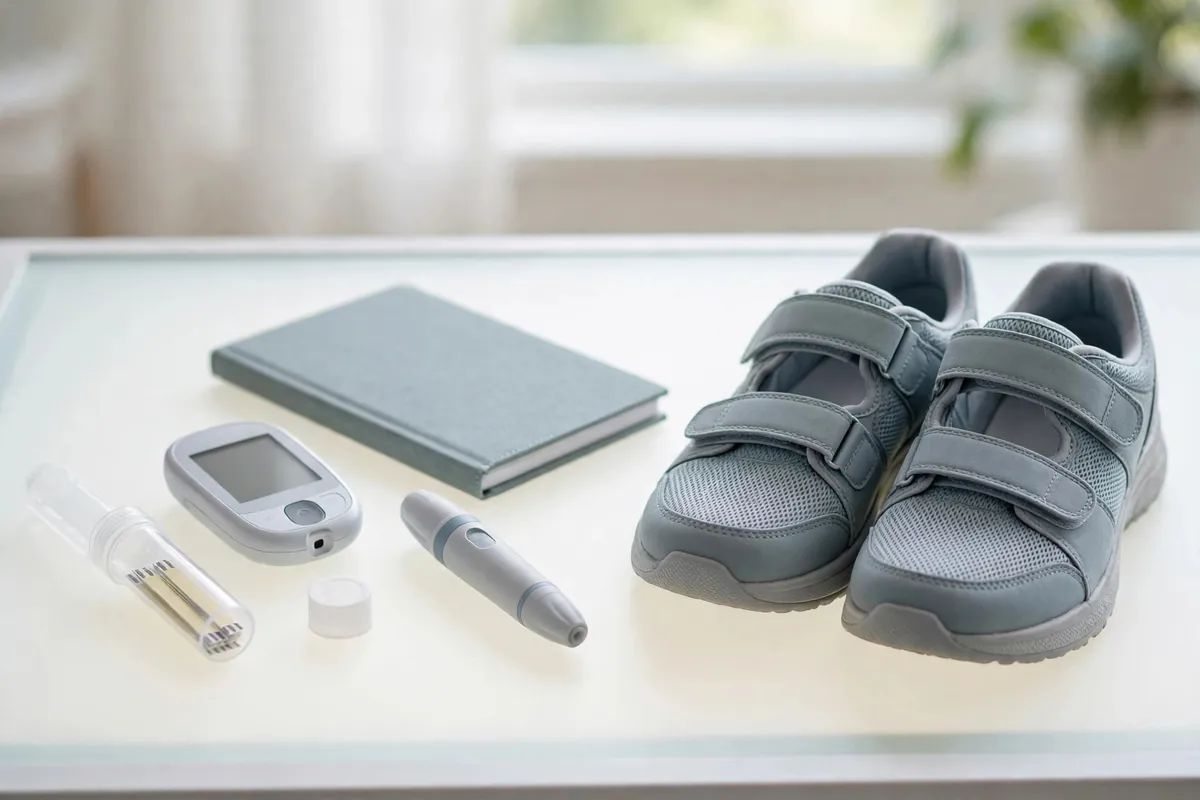
Medicare Part B covers blood glucose testing supplies, insulin pumps and therapeutic shoes for patients in HUDSON who have diabetes. Quantity limits apply, and your doctor can order more only by documenting the extra medical need.
What Medicare typically looks for:
- Test strips and lancets: the standard allowance is up to 300 of each every 3 months if you use insulin, or up to 100 of each every 3 months if you do not. Higher amounts require extra documentation and a recent visit with your treating doctor.
- Continuous glucose monitors (CGMs) are covered if you have diabetes and use insulin, or have a documented history of problematic low blood sugar (hypoglycemia).
- Insulin pumps are covered as durable medical equipment when you meet Medicare's pump criteria; the insulin used in a covered pump is covered under Part B, while insulin injected with a syringe or pen usually falls under Part D.
- Therapeutic shoes: one pair of depth-inlay shoes with 3 pairs of inserts, or one pair of custom-molded shoes with 2 pairs of inserts, per calendar year — if you have diabetes and a foot problem Medicare lists, such as a previous foot ulcer, amputation, foot deformity, or poor circulation, certified by the doctor treating your diabetes.
HUDSON HOSPITAL, INC. accepts Medicare assignment, so for covered items you pay only the Part B deductible and 20% coinsurance of the Medicare-approved amount.
Before your doctor visit
Most Medicare equipment delays are paperwork delays, not medical ones. The appointment where your doctor orders your equipment goes much further when you prepare for it — here is how.
Bring to every appointment
- Your Medicare card and a photo ID. The supplier copies your Medicare Beneficiary Identifier (MBI) exactly as printed, so bring the red, white and blue card itself — not just the number from memory.
- A list of your current medicines, and of any treatments or simpler equipment you have already tried for this problem. Your doctor's notes should show why those options are not enough.
- Recent test results and records connected with the equipment — lab work, sleep studies, therapy or hospital notes. Bring copies if you have them; records from another doctor's office often take days to transfer.
- The name of the supplier you plan to use — HUDSON HOSPITAL, INC. in HUDSON — and ask the office to send the order and the visit notes directly to the supplier. Paperwork that sits in a chart is the most common cause of delays.
- Before you leave, ask whether the written order is complete. Medicare requires every equipment order to show your name or MBI, the order date, a description of the item, the quantity if there is one, and your practitioner's name and real signature — an order missing any of these gets sent back.
- For many higher-cost items — power wheelchairs and some hospital beds, for example — Medicare also requires an in-person visit with your treating practitioner within the 6 months before the order. If your last visit was by phone, or longer ago than that, tell the office when you book.
Getting ready: Medicare Part B Drugs
- Bring a complete list of your medicines with doses. For Part B drugs, both the drug itself and how it is given — through a nebulizer, an infusion pump, or another covered method — affect coverage.
- If the drug follows a Medicare-covered transplant or cancer treatment, bring those dates and records. Some Part B drugs are covered only in those situations.
- Ask your doctor to note why the drug must be given this way instead of as a pill — for several Part B drug categories, that explanation is exactly what Medicare reviews.
Getting ready: Diabetic Care & Supplies
- Bring your medication list, making clear which diabetes medicines you take and whether you use insulin — how much testing-supply coverage you get depends heavily on whether you are insulin-treated.
- Bring recent blood sugar readings or A1C results if you have them, and tell your doctor how often you actually test each day, so the quantities on the order match your real use.
- If you are hoping for a continuous glucose monitor (CGM), describe any dangerously low blood sugar episodes you have had, and when — that history is part of what Medicare looks for.
Before you call HUDSON HOSPITAL, INC.
Five minutes of preparation makes this call go further — the supplier can check your eligibility, confirm your likely costs and start the paperwork on the first try.
Have these ready
- Your Medicare card. The supplier will ask for your Medicare Beneficiary Identifier (MBI), exactly as printed on the card, to check that you are eligible.
- Your doctor's name, and the date of the visit where the equipment was discussed or ordered. The supplier will request the order and visit notes from that office — usually they handle the chasing for you.
- Your Medicare Advantage or other insurance card, if you have one. Plans other than Original Medicare can have different rules, networks and costs.
Ask on the call
- Do you accept Medicare assignment for this item? If the supplier accepts assignment, your share is limited to the Part B deductible plus 20% of the Medicare-approved amount.
- Will Medicare rent this item or buy it — and if it is rented, for how many months? Who do I call for servicing while it is rented?
- What is my likely share of the cost? Ask whether you have met your Part B deductible for the year, and for expensive items ask for the estimate in writing.
- What paperwork do you still need from my doctor — and once you have it, how long until the equipment is delivered?
- Do you deliver and set up the equipment, and show me how to use it? Is there any charge for delivery or setup?
- If you are in a Medicare Advantage plan: are you in my plan's network, and does my plan need to approve the order first (prior authorization)? An out-of-network supplier can cost you much more.
After your equipment arrives
Delivery day is not the end of the process. A few checks when the equipment arrives — and knowing who is responsible for what afterwards — can save you money and frustration.
On delivery day
- Check everything against the order before you sign: the right item, the right size, and every part and accessory on the list. You may refuse equipment that is wrong, damaged or incomplete.
- Sign only for what you actually received, and keep your copy of the delivery ticket. If you are asked to sign an Advance Beneficiary Notice (ABN), read it first — it means the supplier thinks Medicare might not pay, and signing can make you responsible for the full cost.
- Ask to be shown how to use, clean and store the equipment, and get the instructions in writing before the driver leaves.
- Keep HUDSON HOSPITAL, INC.'s service number with the equipment — (715) 531-6450 — and call them first if anything breaks or stops working.
Repairs, servicing and refills
- While Medicare is paying rent on equipment, the supplier owns it and is responsible for keeping it in working order — call them first for repairs or servicing during the rental period.
- When a capped-rental item becomes yours after the final rental month, Medicare can still help pay for medically necessary repairs. Keep your delivery paperwork so the supplier can verify the equipment.
- For oxygen, the supplier's duty lasts beyond the rent: after the 36-month rental ends, they must keep providing your oxygen and servicing the equipment for up to 5 years in total.
- Reorder supplies — masks, tubing, filters, dressings, test strips — before you run out. Suppliers usually need a few days, and Medicare pays only for quantities that match your documented need.
If a bill or a denial looks wrong
- Read your Medicare Summary Notice (MSN) and compare it with what you actually received. Wrong items, wrong quantities, and charges for things you never received do happen — call the supplier first to fix honest mistakes.
- Still not right? Call 1-800-MEDICARE (1-800-633-4227) and ask for an explanation of the claim.
- You have the right to appeal a decision you disagree with. The first step is called a redetermination, and you generally have 120 days from the date on the notice to request it — the notice itself explains how.
- You do not have to handle this alone: your SHIP program gives free help with bills and appeals. You will find their phone number in the free Medicare help section of this page.
- Protect your Medicare number. Never give it to someone who calls offering 'free' equipment you did not ask about — report suspicious calls to 1-800-MEDICARE.
Coverage and payment depend on medical necessity, eligibility, deductibles, supplier requirements, and applicable Medicare rules. Confirm benefits and any authorization requirements with Medicare or the provider.
FEDERAL REGISTRY & COMPLIANCE
CMS Federal Verification & Compliance Profile
Official federal enrollment, administrative identifiers, and executive registry.
National Provider ID (NPI)
Registered Specialties & Licenses
Pharmacy, Community/Retail Pharmacy
Executive Leadership (E-E-A-T)
ALITA RISINGER — Sr Vice President, CFO
Also Registered As
HUDSON HOSPITAL & CLINICS PHARMACY
CMS Provider ID (DMEPOS)
Medicare Enrollment & Status
Active Standing
Pricing & Bidding Compliance
NPI Registration
Registered since 2006
Federal Exclusion Check
Not excluded from federal programs
Registry details are displayed from the supplied provider data. Verify current enrollment and contract status with the relevant federal source before relying on them for billing or coverage decisions.
CMS MEDICARE CLAIMS DATA
Medicare Activity in 2024
Medicare’s own claims records show how much this supplier actually did for Medicare patients in 2024 — the most recent year CMS has published.
What they provided most
The Medicare patients they serve
Their Medicare patients in 2024 were 66 years old on average.
Source: CMS Medicare DMEPOS utilization data (release RY26), calendar year 2024 — Original Medicare (fee-for-service) claims only; Medicare Advantage is not included. Totals are for this supplier’s Medicare provider number (NPI); a supplier with several locations under one NPI reports them together. CMS withholds very small product categories to protect patient privacy. The patient-mix figures are the age and condition shares CMS publishes for this supplier’s own Medicare patients.
LOCAL COMMUNITY HEALTH DATA
Local Community Health & Demographic Profile
Public health benchmarks and chronic disease prevalence within ZIP Code 54016.
Hudson Hospital Inc serves the Hudson, Wisconsin community with a product mix centered on infusion and injectable therapies, immunosuppressive drugs, nebulizer medications, oral anticancer and antiemetic support, and blood glucose monitoring supplies. The regional health profile in ZIP 54016 shows meaningful population-level needs in cancer history, diabetes, and respiratory conditions such as asthma and COPD, which align with several of these supply categories without implying that every resident requires any specific therapy. The supplier’s combination of chronic-condition support products and specialty medication categories is relevant to a community where diabetes and respiratory indicators are prominent and where cancer-related supportive care products can complement local oncology and infusion services. These public health benchmarks reflect regional community context and do not measure individual treatment demand or direct medication orders.
Total Population
33,198
Residents in this ZIP/ZCTA
Population Age 18+
25,319
Residents aged 18 and older
Key Health Metrics
Selected indicatorsCOPD
The COPD indicator estimates the percentage of adults with chronic obstructive pulmonary disease, reported at 5.3% in the regional data. COPD management frequently relies on inhaled therapies, nebulized medications, and consistent access to respiratory supplies, particularly for patients with exacerbation-prone or advanced disease. The supplier’s nebulizer drugs fit naturally within this care environment by supporting respiratory medication delivery where clinically appropriate. The indicator reflects regional population health context and should not be interpreted as a direct measure of nebulizer demand or individual treatment need.
Cancer
The CANCER indicator reflects the estimated percentage of adults in the Hudson, WI area with a history of cancer, reported at 8.9% in this dataset. This population-level measure highlights the presence of cancer survivorship and ongoing oncology-related needs in the community, including supportive care during treatment and recovery. For a supplier offering oral anticancer drugs, oral antiemetic drugs, and infusion-related products, this indicator supports the relevance of medication access and supportive-care supplies that are commonly used across cancer care pathways. It does not suggest that any individual patient requires a specific anticancer or antiemetic product.
Asthma
The CASTHMA indicator reflects the estimated percentage of adults with current asthma, measured at 10.4% in this Hudson, WI area. Asthma care commonly involves inhaled and nebulized medications, trigger management, and ongoing clinical oversight, especially for patients whose symptoms are not fully controlled. Hudson Hospital Inc’s nebulizer drug category is relevant to this respiratory health context because nebulized therapies can be part of acute or maintenance treatment plans when prescribed by a clinician. This benchmark describes community prevalence and does not measure individual treatment demand or direct medication orders.
Diabetes
The DIABETES indicator represents the estimated percentage of adults with diagnosed diabetes, measured at 9.5% for this Hudson, WI ZIP-code area. Diabetes care often involves ongoing glucose monitoring, medication management, and supplies that support self-management and clinical follow-up. Hudson Hospital Inc’s blood glucose monitors and non-mail-order glucose supplies are directly aligned with this chronic disease context, while the broader infusion and medication offerings can support care coordination for patients with more complex treatment needs. This is a community health benchmark, not a patient-level diagnosis or prescription requirement.
How ZIP 54016 Compares With Wisconsin
CDC PLACES 2025 · vs state averageState average is the population-weighted average across all ZIP code areas in Wisconsin in the same CDC release. Figures are model-based CDC estimates for the adult population each measure covers, not counts of diagnosed patients.
Where ZIP 54016 stands in Wisconsin
Stroke here is lower than 93% of ZIP codes in Wisconsin.
Diabetes here is lower than 92% of ZIP codes in Wisconsin.
Source: CDC PLACES ZCTA Public Health Dataset (2025 Release).
MEDICARE FEE SCHEDULE RANGES
What Medicare Allows in Wisconsin
The range of amounts Medicare allows for the most common covered items in each category this supplier is authorized to bill for. A reference for comparing costs — not a price quote from this supplier.
Source: CMS DMEPOS Fee Schedule, October 2026. Each range spans the lowest and highest amounts Medicare published in Wisconsin (non-rural and rural rates) for the common covered items in that category. Amounts are per single item or unit, or the monthly rental for equipment Medicare rents. They are Medicare’s allowances, not this supplier’s prices and not what you would pay: your share depends on the Part B deductible, the 20% coinsurance, whether the supplier accepts assignment, and any supplemental coverage. Prescription drug categories and tube-feeding (enteral/parenteral) nutrition are not shown because Medicare pays for them under different schedules. The payment type shown for a category is Medicare’s payment category for the main equipment in that category, taken from the same fee schedule; individual supplies within a category can be paid differently, and the supplier can confirm how a specific item is handled. Item amounts shown under a category are this state’s non-rural rates for those specific items. Always confirm the exact price with the supplier before ordering.
FREE STATE & FEDERAL HELP
Free Medicare Help in Wisconsin
Free counseling and state programs that can lower what you pay for Medicare and prescription drugs.
Free Medicare Counseling (SHIP)
State Health Insurance Assistance Program (SHIP)
Trained counselors in Wisconsin provide free, unbiased help with Medicare: comparing plans, understanding bills and notices, and finding programs that lower your costs. SHIP counselors do not sell insurance and never charge for help.
TTY: 711
1-800-242-1060State Help With Drug Costs (SPAP)
SeniorCare
Wisconsin's prescription drug help for residents age 65 and older. SeniorCare works together with Medicare Part D. Income limits apply, and there is an annual enrollment fee.
1-800-657-2038SHIP is a federally funded counseling program (Administration for Community Living); contacts follow the national SHIP directory at shiphelp.org. State program details and income limits can change, so please confirm eligibility with the program before applying.
COMMON QUESTIONS
Frequently Asked Questions
Straight answers drawn from this supplier’s federal record.
Is HUDSON HOSPITAL, INC. a Medicare-enrolled supplier?
Yes. HUDSON HOSPITAL, INC. is listed in the federal CMS directory of Medicare DMEPOS suppliers, with Medicare participation beginning in 1998, and is registered under NPI 1598708620. Enrollment means the supplier is authorized to bill Medicare for covered equipment and supplies, subject to Medicare coverage rules.
What does HUDSON HOSPITAL, INC. bill Medicare for?
HUDSON HOSPITAL, INC. is authorized to bill Medicare for 7 categories, including Epoetin, Immunosuppressive Drugs, Infusion Drugs, Nebulizer Drugs, and 3 more. Authorization to bill for a category is not a guarantee of stock on a given day, so call ahead to confirm availability.
Does HUDSON HOSPITAL, INC. accept Medicare assignment?
Yes. HUDSON HOSPITAL, INC. accepts Medicare assignment, so for covered items your share is generally the Part B deductible plus 20% coinsurance of the Medicare-approved amount.
How do I contact HUDSON HOSPITAL, INC.?
You can reach HUDSON HOSPITAL, INC. by phone at (715) 531-6450. The practice is located at 405 STAGELINE RD, Hudson, WI 54016. Today (Wednesday), its listed hours are Open 24 hours. Call ahead to confirm current hours and what you should bring.
What does Medicare allow for Blood Glucose Monitors/Supplies (Non-Mail Order) in Wisconsin?
In Wisconsin, Medicare-approved amounts for Blood Glucose Monitors/Supplies (Non-Mail Order) run $1.00 – $95.23 (October 2026 fee schedule). For example, Blood glucose monitor home (E0607) is $9.52/month. Medicare usually pays for this as a purchase, so you own it from the start. For some lower-cost items you may choose to rent instead — ask the supplier which fits your situation. The approved amount is the ceiling Medicare allows, not a shelf price; when a supplier accepts assignment, your share is generally the Part B deductible plus 20% of that amount.
What does Medicare require for Medicare Part B Drugs coverage?
Only a limited set of prescription drugs is covered under Part B instead of Part D for patients in Hudson — mainly drugs given through medical equipment, plus a few categories named in the law. Each drug has its own strict conditions. In particular: Inhalation (nebulizer) drugs are covered only when administered at home through a Medicare-covered nebulizer.
Where can I get free help with Medicare in Wisconsin?
State Health Insurance Assistance Program (SHIP) offers free, unbiased Medicare counseling in Wisconsin as part of the national SHIP network. Call 1-800-242-1060 for help comparing coverage, understanding a bill or appealing a denial.
MORE MEDICARE SUPPLIERS
Medicare Suppliers Near Hudson
Hudson has 6 Medicare-enrolled DMEPOS suppliers, and 4 of them accept Medicare assignment. Suppliers in the city bill an average of 9.0 supply categories — HUDSON HOSPITAL, INC. bills 7.
6 listed suppliers share ZIP code 54016.

Reviews for HUDSON HOSPITAL, INC. (136)
What patients say on Google — the newest reviews patients and carers have left for HUDSON HOSPITAL, INC., shown as written. MedicineContact does not edit patient reviews.
**Excellent Staff Overall, but a Serious Concern About One Nurse**
I was admitted to Hudson Hospital and Clinic in Hudson, WI, around noon on October 23 with a renal infarction (a blood clot in my kidney). The ER staff diagnosed my condition promptly and admitted me without delay. My admission nurse, Natalie, and overnight nurse, Jessi, were excellent—compassionate, attentive, and helpful with pain management.
Unfortunately, my experience changed the following morning around 5–6 a.m., when I was assigned to Chloe. I pressed the call button twice and was told a nurse would be there shortly. Approximately 35–40 minutes passed before she arrived. I was in severe pain and struggling to focus while answering her questions about my pain level. Instead of feeling supported, I was told to calm down, leaving me feeling as though my pain was an inconvenience. She also told me she would return in 45 minutes but did not come back for approximately an hour.
By 10–11 a.m., I was reassigned to Natalie, and the quality of care improved significantly. My family visited that day, and the remainder of my stay and overnight care were excellent.
On my final morning, Chloe was assigned to me again but did not check on me after the shift change. Fortunately, Jessi ensured my medications were taken care of and helped me remain comfortable before her shift ended around 9 a.m.
I understand nurses have demanding workloads, but communication, responsiveness, and compassion matter, especially when patients are in significant pain.
**My complaint is specifically about Chloe, not the hospital as a whole.** The ER staff, Natalie, Jessi, and the other caregivers were wonderful. However, my experiences with Chloe left me feeling dismissed and unsupported. I hope management reviews these concerns so other patients receive the attention, respect, and compassion they deserve.
Would NOT recommend. Go anywhere else if you can
My 14 year old daughter received care from Dr. Brian J Peterson in the Hudson Hospital emergency room for an ovarian cyst rupture. Throughout her care he kept telling her it was gas pains and was belittling to her making her doubt herself. He told her that she shouldn't need pain killers for what she was experiencing and even after the ultrasound showed fluid as a result of the rupture, he doubled down on the gas pain "diagnosis". He is a shameful excuse for a doctor and should consider a new career – zero bedside manner or compassion. We now are paying off a bill for over $5000 for what the doctor claimed was "gas pains". HealthPartners has made it nearly impossible to file a complaint.
These doctors sent my 50 year old mother home with Appendicitis and a prescription that did absolutely nothing. Ended up needing to go into emergency surgery the next day when we took her to another clinic. They had zero empathy or concern for her. Absolutely horrified that they would treat a patient like this.
About 1.5 years ago, I had an epidural at Hudson Hospital during childbirth that resulted in a very serious complication involving a cerebrospinal (CSF) leak, leading to severe post-dural puncture headache (PDPH).
The nurse anesthetist performing the epidural appeared inexperienced given length of time for placement and overall demeanor (later found out he was new). After delivery, I experienced severe PDPH symptoms, the same provider stated he needed to "check the literature" on how to handle the situation any further.
After multiple trips in and out, a blood patch was attempted. During that procedure, another provider was at bedside giving him instruction and guidance on how to perform the blood patch, which did not inspire confidence as I had just delivered a baby and experienced a serious complication. Unfortunately, it was unsuccessful (did this a 2nd try with no success).
Entire experience was extremely traumatic because of the epidural complication and unsuccessful attempts to correct it. What followed were multiple ER visits, MRI's, doctor appts, visits to Mayo Clinic and ongoing treatment. I now deal with chronic back pain and pain related to nerve damage.
Most disappointing was the response afterward. When I tried to discuss my concerns with the anesthesia team/hospital and offer suggestions to help prevent this from happening to another mom, I was told I was "unlucky" this happened to me and they consider themselves a "rural hospital" without the same resources as larger hospitals so my recommendations to make these procedures safer would not happen.
Patients should know that Hudson Hospital contracts anesthesia services through River Valley Anesthesia. Based on my experience, I would ultimately avoid this hospital for procedures involving anesthesia to ensure the best possible outcome.
Brought my sister in for an appointment
I’ve unfortunately had to visit the emergency room at Hudson Hospital multiple times, and each experience has been extremely disappointing.
An emergency room should feel like a place where people are treated with urgency and compassion, but that has not been my experience here. On several visits, staff appeared relaxed, sitting back and scrolling on their phones while patients were clearly in distress. There was very little empathy shown toward people who were already dealing with stressful and frightening situations.
The first time I brought my father in, he was treated very poorly by several of the nurses. The only person who showed any kindness or professionalism was the doctor.
Now I’m here again with my daughter, and the experience has somehow been even worse. After waiting for two hours without being seen, we were actually removed from the room we were placed in so that another patient could use it. Being moved out after already waiting that long felt incredibly disrespectful and dismissive.
When people come to an emergency room, it’s because something is wrong and they need help. Patients deserve to feel heard, respected, and cared for during those moments. Sadly, that has not been the case here.
We had to visit the Hudson Hospital emergency room in December, and I want to start by saying the doctor and staff were excellent — caring, professional, and attentive.
However, we were very disappointed by the billing. The ER doctor prescribed 14 tablets (2 per day), which we filled at the Hudson Hospital pharmacy for $68 (no insurance for this fill) — about $4.85 per tablet. Before we left the ER, one tablet was administered on-site. We were later billed $373 for that single tablet. For context, publicly available pharmacy pricing data shows that medication typically cost around $2 each.
It’s easy to see why people feel hospitals such as Hudson Hospital “gouge” their patients. There was absolutely no reason to administer that single tablet (for $373) when the prescription was going to be filled within the hour. And, charging 77 TIMES their own pharmacy price is simply outrageous.
Hudson Hospital – you should be ashamed of the way you’re trying to gouge your patients – just because “you can”.
Showing the 10 newest of 136 reviews.
Read more reviews on Google MapsPatient reviews collected from Google in November 2026, shown as written — MedicineContact does not edit them. Ratings and counts can change on Google at any time.