
Home / Health Articles / Medicare Basics
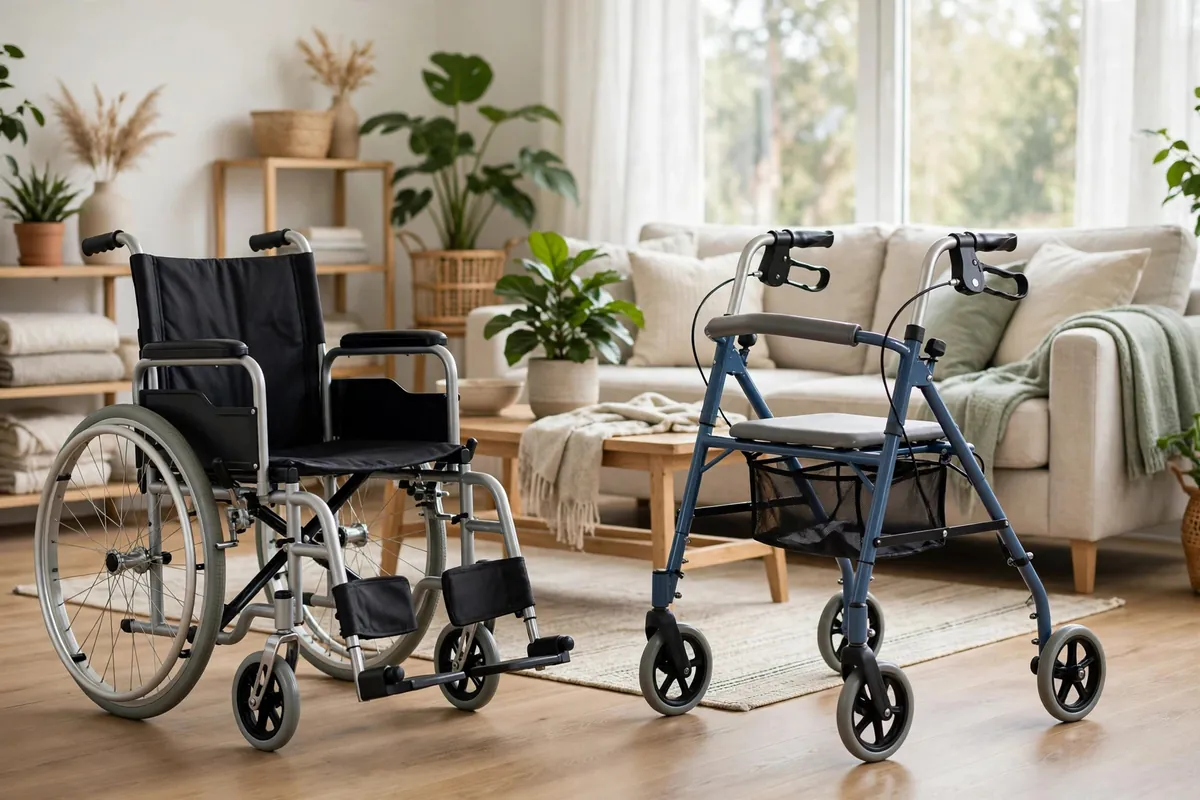
Medicare does not pay for all equipment the same way. Some items it buys for you outright. Some it rents for thirteen months, after which the item is yours. Oxygen it rents for three years and you never own at all. Which arrangement an item falls under — its payment class — decides whether you face one bill or a monthly one, and for how long.
This guide sets out the payment classes with the actual amounts Medicare allows, taken from the federal fee schedule. Every supplier listing and price guide on this site works from the same classes.
Contents
- The four payment classes at a glance
- Purchased outright
- Capped rental: thirteen months, then you own it
- Oxygen: a rental that never becomes a purchase
- Trial, then purchase
- Ongoing supplies
- Why the class matters for your wallet
- Common questions
The four payment classes at a glance
| Payment class | Examples | How Medicare pays | Who owns it |
|---|---|---|---|
| Purchased | Test strips, walking boots, most braces | One payment, split 80/20 | You, from the start |
| Capped rental | CPAP machines, hospital beds, standard wheelchairs | Monthly rental for up to 13 months, split 80/20 | You, after the 13th payment |
| Oxygen rental | Oxygen concentrators and related equipment | Monthly rental for 36 months | The supplier — always |
| Ongoing supplies | Catheters, ostomy pouches, dressings, CPAP masks | Per item, as supplied, split 80/20 | You (they are used up) |
A fifth, smaller pattern — a trial rental that converts to a purchase — applies to a few items, TENS units among them, and is covered below. In every class, your share is calculated the same way: 20% of the Medicare-approved amount once the Part B deductible ($283 in 2026) is met, and only in full if the supplier accepts assignment.
Purchased outright
Items Medicare classifies as inexpensive or routinely purchased are bought in a single transaction. The fee schedule sets one amount per item: blood glucose test strips are $8.32 for a box of 50 in every state; a prefabricated walking boot has a median amount of $343. Medicare pays 80% of the amount and you pay 20%, once. There is no monthly tail — but there is also no rental period during which the supplier is responsible for the item, so check the supplier’s own return and fitting policies before delivery.
Capped rental: thirteen months, then you own it
Most substantial equipment — CPAP machines, hospital beds, manual wheelchairs, patient lifts — is paid as a capped rental. Medicare rents the item at a monthly fee-schedule amount for up to 13 months of continuous use. The median monthly amounts give the scale:
| Item | Median monthly amount | Your 20% | 13-month total (approved) |
|---|---|---|---|
| CPAP machine | $50.90 | $10.18 | $661.70 |
| Hospital bed, semi-electric | $76.74 | $15.35 | $997.62 |
| Standard wheelchair | $28.87 | $5.77 | $375.31 |
Three features of capped rental are worth knowing. First, the 13 payments are a ceiling, not a commitment: if the item is returned or no longer needed, rental stops. Second, during the rental the supplier remains responsible for servicing and maintaining the equipment. Third, after the 13th monthly payment, ownership transfers to you and rental charges end; Medicare generally still helps with medically necessary repairs after that point. The CPAP, hospital bed and wheelchair guides give the state-by-state amounts for each of the three.
Oxygen: a rental that never becomes a purchase
Oxygen equipment is the exception to almost every pattern above. A stationary oxygen concentrator rents at a median of $100.00 a month, but payments run for 36 months, not 13 — and the equipment never becomes yours. In exchange, the supplier’s obligations run longer than the payments: for a full five years from the first delivery, the supplier must keep providing the oxygen and maintaining the equipment, including the two years after payments stop. If you move or your supplier stops serving your area during that period, the arrangements have to be transferred — raise it with the supplier early, not at the moving van.
Trial, then purchase
A TENS unit for chronic pain is the common example. Because the treatment does not work for everyone, Medicare first pays a short trial rental — usually two months — while you and your clinician establish whether it helps. If it does, Medicare converts the arrangement to a purchase (the median purchase amount is $83.22) and covers the ongoing electrode supplies, a median of $12.95 a month, as an ongoing supply. The logic is worth recognising wherever it appears: the trial exists so that Medicare — and you — do not pay full price for equipment that turns out not to be used.
Ongoing supplies
Supplies are not equipment at all in Medicare’s payment logic: they are bought per item, as needed, at small unit amounts — an intermittent catheter at a median of $2.46 each, an ostomy barrier at $8.84. The amounts look trivial until they are multiplied by a month’s usage, which is why Medicare sets usual maximum quantities for each supply (up to 200 catheters a month, for example) and why the 20% on supplies is a real monthly cost for many people. Our guide to ostomy, catheter and wound-care supplies works through the monthly arithmetic.
Why the class matters for your wallet
- Timing of the deductible. A purchase puts a whole item’s 20% — and possibly the deductible — into one month. A rental spreads it, which can make equipment ordered late in the year cheaper out of pocket than the same item ordered in January.
- How long you will use it. For short recoveries, a capped rental that stops when the item goes back costs far less than the 13-month total suggests. For permanent needs, the totals in the table above are the real comparison.
- Who maintains it. During any rental, maintenance is the supplier’s problem. Once you own an item, repairs follow Medicare’s repair rules and your supplier’s policies.
Common questions
Can I choose to buy a rental item instead, and be done with it?
For capped-rental items, Medicare’s payment follows the rental schedule; a supplier may offer a cash purchase, but Medicare will not substitute a one-off purchase payment for the 13-month rental on those items. Ask what a cash price would be before assuming it is cheaper — against the totals above, it often is not.
What happens to the rental if I stop using the equipment?
Tell the supplier. Rental billing should stop when the item is returned or therapy ends; you are not committed to all 13 months. Do not let an unused item keep billing — check your Medicare Summary Notices.
I am moving to another state. Does the rental move with me?
Usually the arrangement must be transferred to a supplier in your new area, and fee-schedule amounts differ slightly by state. Oxygen has the strongest continuity rules because of the supplier’s five-year obligation. Arrange the transfer before the move where you can.
Does the 80/20 split work the same in every class?
Yes — after the deductible, Medicare pays 80% of the approved amount and you pay 20%, whether the amount is a purchase price, a monthly rental or a single catheter. Assignment is what guarantees the approved amount is the whole price.
References
- CMS DMEPOS Fee Schedule: payment classes and state amounts for CPAP devices, hospital beds, wheelchairs, oxygen equipment, glucose supplies and TENS, as extracted from the MedicineContact database, November 6, 2026.
- Medicare.gov, “Durable medical equipment (DME) coverage” and “Oxygen equipment & accessories” — medicare.gov.
- Medicare Part B deductible for 2026: $283 (CMS annual deductible announcement).
This guide is general information about Medicare coverage and costs, not medical advice and not a coverage decision for any individual. Fee-schedule amounts are those published by CMS and change periodically; suppliers’ own charges may differ. Confirm your coverage and expected costs with your supplier and with Medicare at 1-800-MEDICARE (1-800-633-4227) or Medicare.gov before ordering equipment. MedicineContact is an independent directory of Medicare-enrolled suppliers. It is not affiliated with Medicare, CMS, or any government agency, and listing a supplier here is not an endorsement of that supplier.